
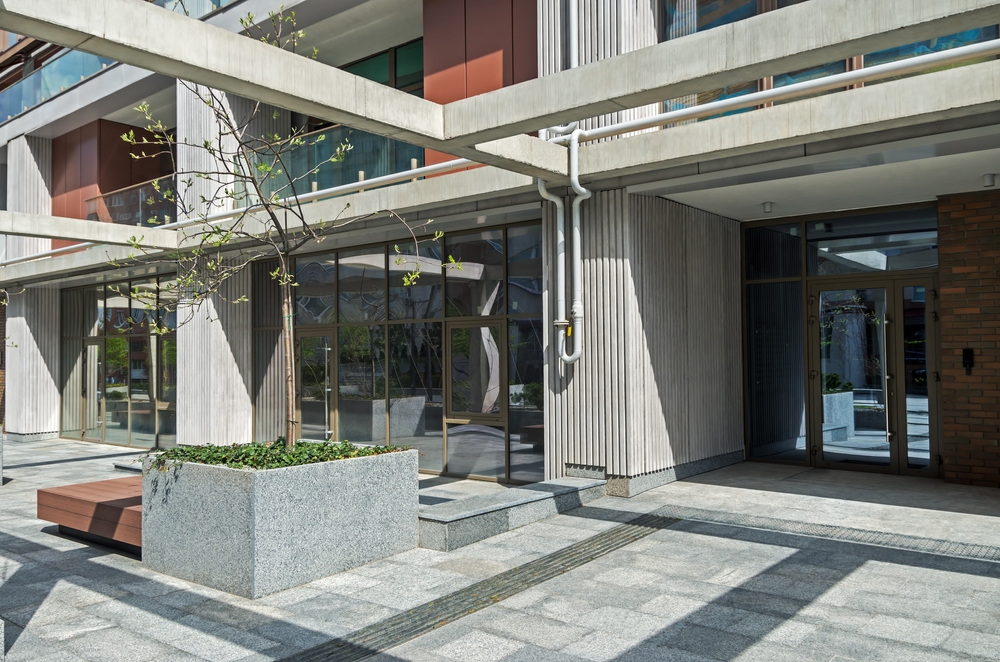

Commercial sidewalks are an important part of your property’s safety, accessibility, and overall appearance. Whether you manage a retail center, office building, school, apartment complex, or industrial facility, you want visitors, employees, and customers to move around your property safely.
However, concrete sidewalks can develop cracks, sink, or become uneven over time. Changes in soil conditions, poor drainage, erosion, and improper installation/mistakes can all contribute to these problems. A small crack or slight change in elevation may not seem urgent, but damaged sidewalks can create trip hazards and lead to more extensive concrete repairs if left unaddressed.
For commercial property owners, investing in commercial concrete repair is about more than maintaining curb appeal. It’s an important part of protecting visitors, reducing potential liability, and keeping your property in good condition.
Here’s what you should know about commercial sidewalk leveling, the risks of ignoring concrete damage, and how Pro Polyjacking can help restore damaged sidewalks.
Why Commercial Sidewalks Become Uneven
Concrete sidewalks are built to withstand regular foot traffic and exposure to the elements. Over time, though, the soil beneath them can shift, settle, or erode, leaving sections of concrete without the support they need.
Some of the most common causes of uneven commercial sidewalks include:
- Soil settlement: Soil beneath a sidewalk may compress over time, causing the concrete above it to sink.
- Poor drainage: Water flowing beneath or around a sidewalk can wash away supporting soil and create voids.
- Expansive clay soil: Changes in moisture can cause certain soils to expand and contract, contributing to movement beneath concrete slabs.
- Freeze-thaw cycles: Water that enters cracks and freezes can contribute to deterioration, while seasonal soil movement can affect the stability of the sidewalk.
- Tree roots: Growing roots can push concrete upward or contribute to uneven sections.
- Improper installation: Inadequate soil compaction or other installation issues can leave concrete more susceptible to settlement.
In the Kansas City area, changing moisture levels and expansive clay soils can make concrete settlement a recurring concern. When the ground beneath a sidewalk shifts, individual sections may sink at different rates, creating uneven surfaces and visible cracks.
Take a look at our recent article to learn more about understanding concrete leveling and why it matters.
The Risks of Ignoring Uneven Commercial Sidewalks
It’s easy to put off concrete repairs when a sidewalk still appears usable. However, damaged sidewalks can affect more than the appearance of your property. Ignoring the problem can create safety concerns, accessibility challenges, and additional maintenance expenses.
1. Increased Trip-and-Fall Hazards
One of the biggest concerns with uneven concrete is the risk of trips and falls. When one sidewalk section rises above another or a slab sinks into the ground, the change in elevation can catch pedestrians off guard.
This can be particularly concerning around busy storefronts, office entrances, schools, healthcare facilities, and other properties with frequent foot traffic. Visitors may be carrying bags, looking at their phones, or navigating the area with limited mobility, making uneven surfaces harder to avoid.
Cracks, broken edges, and gaps can create additional obstacles. Even when a damaged section appears minor, it deserves attention if it creates a potential hazard.
Read more about how polyjacking reduces trip hazards in public spaces and increases safety.
2. Accessibility Challenges
Commercial property owners should also consider how uneven sidewalks affect people with disabilities. Accessible routes need to meet applicable accessibility requirements, and cracks, abrupt changes in elevation, or deteriorating walking surfaces may interfere with safe passage.
Depending on the property and the location of the damage, uneven concrete can create difficulties for wheelchair users, people using walkers, and individuals with other mobility limitations. Maintaining ADA-Compliant Walkways with concrete leveling is crucial for the safety of your employees, guests, visitors, patients, clients, or the general public.
3. Potential Liability and Unexpected Costs
When a visitor trips on damaged concrete, a commercial property owner may face an injury claim, insurance questions, or other legal and financial consequences. The outcome depends on the circumstances, applicable laws, and the property’s responsibilities, but maintaining walking surfaces is an important part of responsible property management.
Delaying repairs can also increase maintenance costs. A sunken slab may continue to settle, cracks may widen, and water may collect in areas where it previously drained away. If the concrete deteriorates beyond what can reasonably be lifted or repaired, replacement may become necessary.
4. Reduced Curb Appeal and Disruptions to Business
Your sidewalks are often among the first features customers and visitors encounter. Cracked, uneven, or deteriorating concrete can make a property look neglected, even when the building itself is well maintained.
Damaged sidewalks can also interfere with daily operations. Depending on the location and severity of the problem, property managers may need to redirect foot traffic, mark off sections of a walkway, or coordinate more extensive repairs.
For retail centers, office buildings, and other commercial properties, maintaining clean, stable walking surfaces supports a more professional appearance and a better visitor experience.
What Is Commercial Concrete Leveling?
Commercial concrete leveling is the process of raising sunken concrete slabs to restore a more even surface. Instead of removing and replacing an entire sidewalk, a contractor may be able to lift the existing concrete when it remains structurally sound.
One method is polyjacking, which uses expanding polyurethane foam to fill voids beneath a concrete slab and help raise it toward its intended position.
The polyjacking process typically involves several steps:
- Inspection and assessment: A technician evaluates the sidewalk, identifies areas of settlement, and considers possible causes of the damage.
- Small injection holes: Small holes are drilled through the concrete at selected locations.
- Polyurethane injection: The technician injects polyurethane foam beneath the slab, where it expands to fill voids and help stabilize the underlying support.
- Lifting and adjustment: As the foam expands, it raises the concrete toward the desired elevation. The technician monitors the slab during the process.
- Finishing and cleanup: The injection holes are patched, and the repaired area is checked.
Polyurethane foam is lightweight and cures quickly, which can help reduce the disruption associated with commercial sidewalk repairs. Depending on the project and site conditions, this approach may allow a walkway to return to service sooner than a traditional replacement project.
Why Polyjacking Can Be a Good Option for Commercial Sidewalk Repair
For commercial property owners, the right repair method needs to address the problem while considering cost, durability, and disruption to the property.
Polyjacking offers several potential advantages when the existing concrete is suitable for lifting.
Less Disruption Than Full Replacement
Replacing a sidewalk usually involves breaking up and removing the damaged concrete, preparing the base, pouring new concrete, and allowing it to cure. This can require more equipment, create additional debris, and restrict access to the affected area for longer.
Polyjacking works beneath the existing slab, so it may allow the sidewalk to be restored without removing and replacing all the concrete. Smaller injection holes also mean less disturbance to the surface.
For a busy commercial property, reducing the scope of work can make it easier to coordinate repairs around business hours and pedestrian traffic.
Lightweight Support Beneath the Slab
Traditional mudjacking uses a cement-based slurry to lift sunken concrete. Polyjacking uses expanding polyurethane foam, which adds substantially less weight beneath the slab.
This can be beneficial when the soil has already struggled to support the existing concrete. The foam expands into available voids and helps stabilize the area beneath the sidewalk.
However, the effectiveness of any leveling method depends on the concrete’s condition and the underlying site conditions. A professional assessment helps determine whether the slab can be lifted successfully.
Faster Return to Use
Polyurethane foam cures quickly, which can help limit downtime compared with some traditional repair methods. The actual time before a sidewalk can reopen depends on the project, the condition of the concrete, site conditions, and the contractor’s recommendations.
This can be especially helpful for businesses that rely on consistent access to entrances, storefronts, parking areas, and pedestrian routes.
A Potential Alternative to Replacement
Not every damaged sidewalk needs to be replaced. If the concrete is still structurally sound but has settled because of voids or soil movement, lifting it may be a practical alternative.
On the other hand, concrete that is severely crumbled, extensively fractured, or otherwise deteriorated may not be a good candidate for leveling. In those cases, replacement or another repair method may be more appropriate.
For help comparing the options, read Concrete Leveling or Replacement: Which Option Is Right for You?.
What Should Commercial Property Owners Look for?
Regular inspections can help you catch sidewalk problems before they become larger maintenance concerns. Property managers don’t need to diagnose the underlying cause themselves, but they should know which warning signs warrant a closer look.
During routine property inspections, check for:
- Uneven slab edges: One section of concrete sits noticeably higher or lower than the next.
- Cracks and broken corners: Cracks are widening, edges are crumbling, or pieces of concrete are breaking away.
- Pooling water: Water collects on the sidewalk after rain rather than draining away.
- Visible gaps beneath slabs: The edges of a sidewalk appear unsupported, or soil has washed away.
- Changes near entrances and ramps: Concrete movement has affected transitions between walking surfaces.
- Recurring damage: A section that has been patched previously develops new cracks or settlement.
Documenting these issues can help you track changes over time and prioritize repairs. If a sidewalk presents an immediate safety concern, take reasonable steps to protect pedestrians and arrange an assessment promptly.
Commercial property owners should also consider drainage around the building, downspouts, landscaping, and areas where water regularly flows across the sidewalk. Correcting contributing drainage problems may help reduce the likelihood of recurring settlement, although it cannot guarantee that future movement will not occur.
Keep Your Commercial Sidewalks Safe and in Good Condition
Uneven commercial sidewalks are easy to overlook until someone trips, water begins collecting in the wrong places, or a small repair turns into a larger project. Taking action early can help you address potential hazards, maintain accessibility, and make informed decisions about your property’s concrete.
If your sidewalks are cracked, sunken, or uneven, a professional evaluation can help determine whether concrete leveling is a suitable solution or whether replacement is needed. Contact Pro Polyjacking to discuss your commercial concrete repair needs and request an estimate. Our team can help you evaluate the problem and find a practical way to restore your sidewalks.