Mudjacking in Kansas City: What It Costs, How It Works — and What We Do Instead?
If your driveway, patio, or sidewalk has sunk, you've probably come across mudjacking. Here's an honest look at the method — the cost, the process, the trade-offs in Kansas City's clay soil — from a local company that lifts concrete a different way.
Mudjacking (also called slabjacking or mud lifting) has been raising sunken concrete since the early 1900s. A crew drills a pattern of holes — typically 1⅝ to 2 inches wide — through the settled slab, then uses a hydraulic pump to force a slurry of water, soil, and cement underneath. The pressure lifts the slab back toward level, and the holes are patched with fresh concrete.
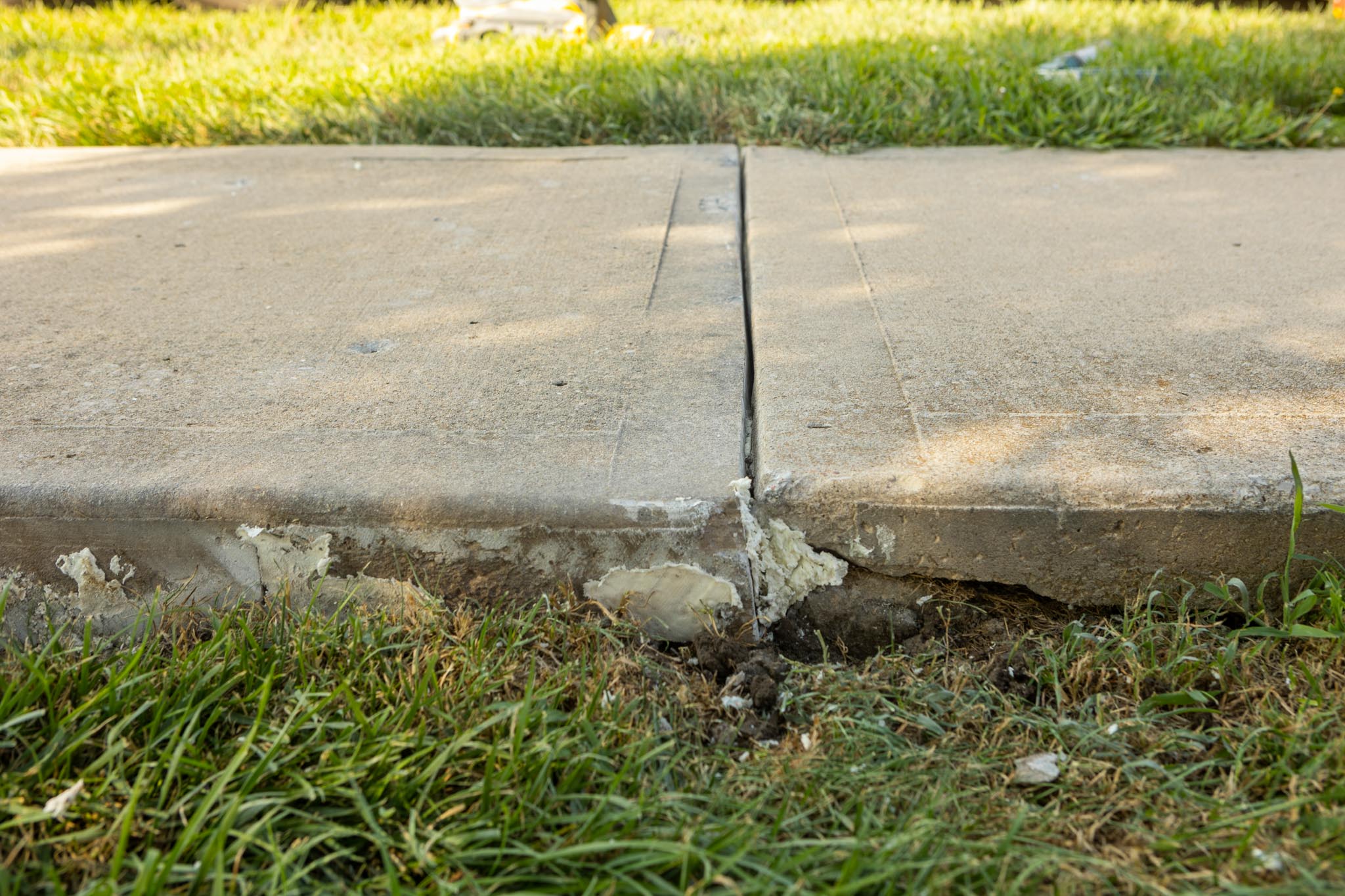
It's widely available in Kansas City, it costs less than replacement, and when the ground underneath cooperates, it works. The honest question isn't whether mudjacking can lift concrete — it can — it's how long the lift lasts, and what the slurry itself does to soil that has already proven it can't carry the load.
"WHATs MUDJACKING Cost?"
What Mudjacking Costs in Kansas City
Most residential mudjacking in the KC metro lands between $3 and $9 per square foot per inch, depending on the project, the void underneath, and how far the slab has settled. Here's the part that surprises people: our polyurethane quotes typically land in the same neighborhood — often about the same as a mudjacking bid, sometimes only slightly more.
So the real comparison isn't the price — it's what the same money buys: a lift that's commonly repeated within 5–10 years, or one designed to hold for the long haul. Full breakdown in our Kansas City mudjacking cost guide →
Top Reasons Mudjacking Struggles — Especially in KC Soil
1.
The slurry is heavy
Cured mud slurry weighs roughly 100 lbs per cubic foot. That load sits on the same weak, shifting soil that let your slab sink in the first place.
2.
Water washes it out
Slurry is soil-based, so it can erode as water moves under the slab — and Johnson County's expansive clay moves water constantly as it swells and shrinks.
3.
Big patch holes
Those 1⅝–2 inch holes get patched, but the patches stay visible across your driveway or patio for its lifetime.
4.
Days of cure time
Mudjacked slabs are typically off-limits for 24–72 hours while the slurry sets. Plan on parking on the street.
"WHAT's a better option?"
How We Lift Concrete Instead: Polyurethane (Polyjacking)
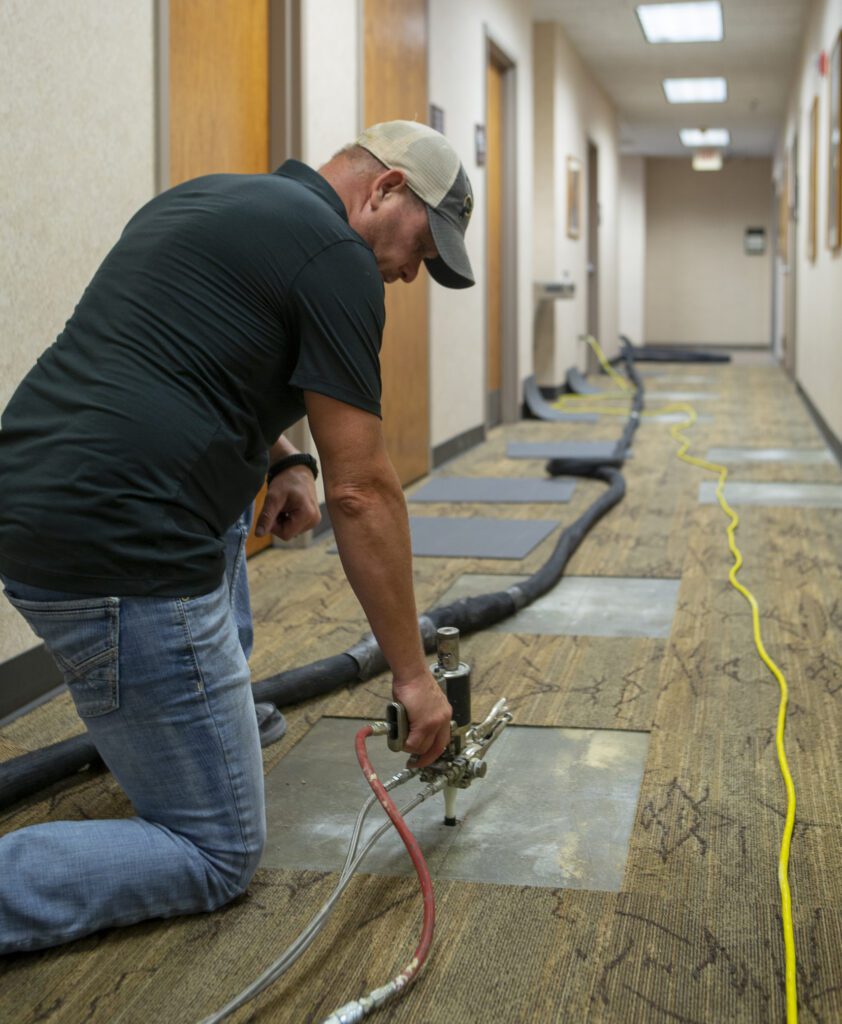
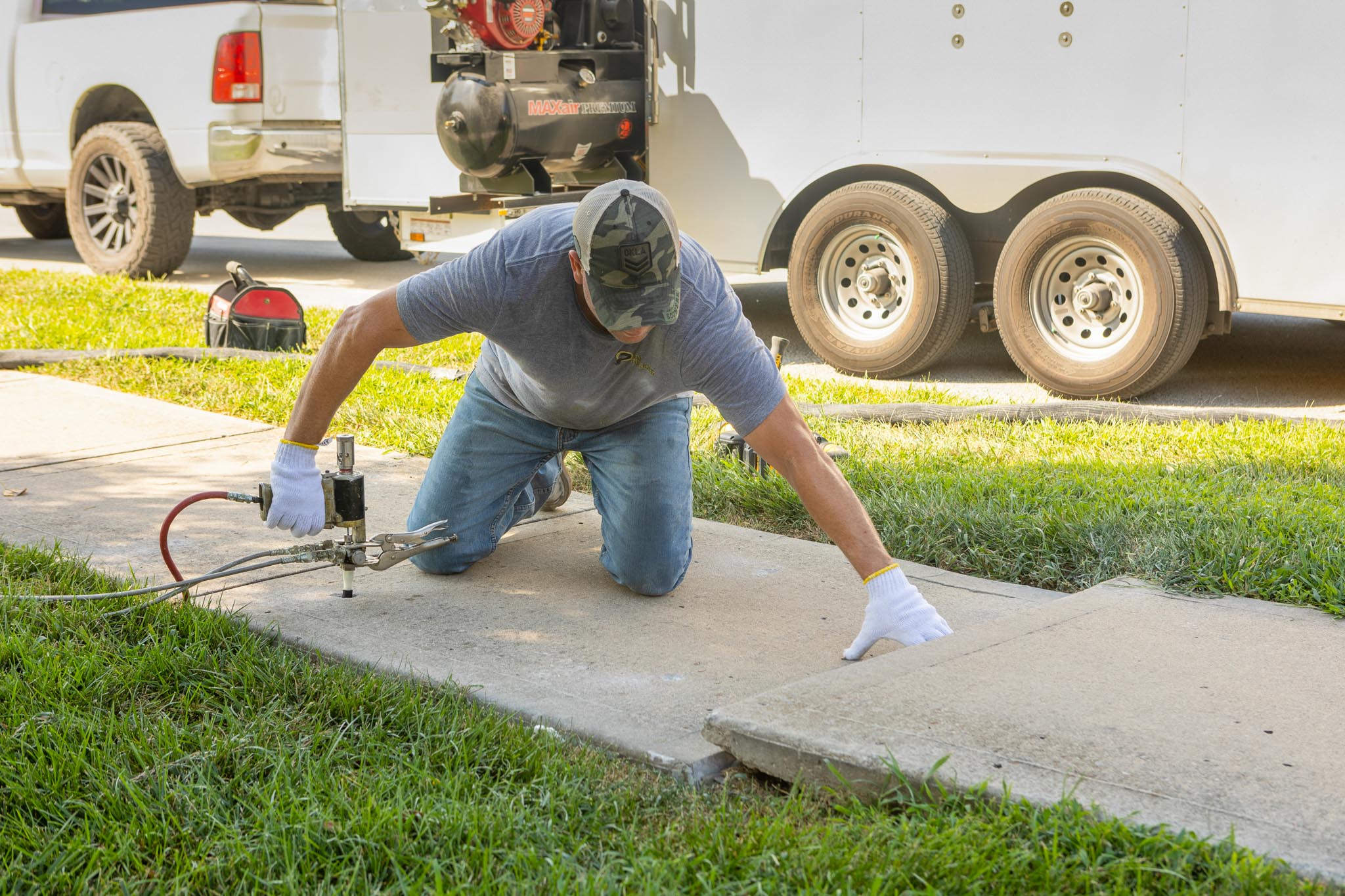
We solve the same problem — sunken, settled concrete — by injecting high-density polyurethane foam through dime-sized holes. The foam expands in seconds, fills the voids, compresses and stabilizes the loose soil, and lifts the slab back to level. It cures in minutes, weighs 2–4 lbs per cubic foot, and it's hydrophobic, so water can't wash it away.
Mudjacking
Polyjacking (what we do)
Injection holes
1⅝ – 2 inches, visible patches
Dime-sized, most people can't find them
Back on the slab
24 – 72 hours
About 15 minutes
Material weight
~100 lbs / cubic foot
2 – 4 lbs / cubic foot
Water resistance
Slurry can erode and wash out
Hydrophobic — works even around wet or submerged concrete
Longevity
Commonly 5–10 years, often less in expansive clay
Designed as a long term repair
Cost
Often the cheapest option
About the same as mudjacking, or slightly more — and you buy it once
Kansas City Mudjacking Questions, Answered Straight
Do you offer traditional mudjacking?
No. We specialize in polyurethane concrete lifting (polyjacking). It fixes the same problem — sunken concrete — with smaller holes, a 15-minute cure, and a material that won’t wash out. If you specifically want mud-slurry lifting, we’re not the right fit, and we’ll say so. If you want the slab fixed once, we’d love to quote it so you can compare both numbers.
Is polyjacking really better than mudjacking?
For most residential slabs, yes — on hole size, cure time, material weight, and lifespan. Mudjacking’s genuine advantage is a lower upfront price, and for a house you’re selling next year, that can be a rational choice. We’d rather tell you that than pretend the decision is one-sided.
Does polyurethane cost more than mudjacking?
Typically only slightly — and often our quote lands right around the mudjacking bids. And since mudjacking is commonly repeated within 5–10 years, even a small difference disappears the first time a slurry lift needs redoing. The cost guide walks through a real example.
Will I be able to see the repair afterward?
Our injection holes are about the size of a dime — roughly an inch smaller than mudjacking’s — and we patch them to blend. Most homeowners can’t point them out a month later.
My concrete is cracked — can it be lifted, or does it need replacement?
Sound slabs with a few clean cracks usually lift beautifully. Crumbling, spalling, or badly fractured concrete needs replacement, and we’ll tell you honestly which side of the line yours is on. Here’s how to judge it yourself: mudjacking vs. concrete replacement →
How fast can you come out?
Most Johnson County estimates within 2–3 business days. Estimates are free and take about 30 minutes.