
Concrete Step & Stair Leveling
Uneven or sinking concrete steps can create a serious trip hazard and make the entrance to your home or business look neglected. Pro Polyjacking provides professional concrete step leveling throughout the Kansas City area using lightweight polyurethane foam to carefully raise settled steps, fill underlying voids, and stabilize the soil beneath them. Compared with traditional mudjacking, polyjacking uses smaller injection holes, adds far less weight to unstable soil, and provides a durable, water-resistant solution for restoring concrete stairs.

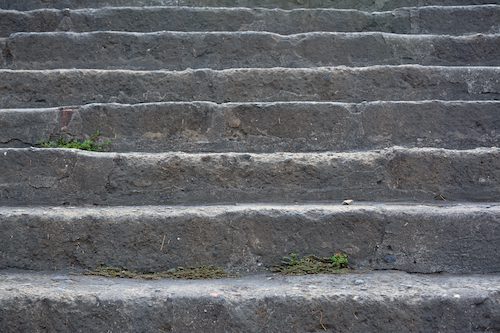
"WHAT IS IT?"
Why Sinking Concrete Steps Are a Problem
Sinking concrete steps are more than a cosmetic issue. As the soil beneath a staircase settles, washes away, expands, or contracts, individual steps or the entire concrete stair section can move out of position. In the Kansas City area, this problem is especially common because concrete is exposed to shifting clay soils, significant moisture changes, heavy rainfall, summer drying, and winter freeze-thaw cycles. These conditions can gradually create voids beneath the stairs and reduce the support that originally kept the concrete level. As the steps settle, riser heights can become uneven, gaps may develop between the stairs and the porch or foundation, water may begin collecting in low areas, and cracks can form as the concrete is placed under uneven stress. Even a relatively small height difference between steps can create an uncomfortable or potentially dangerous walking surface for residents, customers, visitors, and delivery personnel. Delaying concrete stair repair can also allow water to enter newly created gaps and contribute to additional soil movement beneath the stairs. When the concrete itself remains structurally sound, professional concrete step leveling can address the settlement from below and restore the steps without the cost and disruption of tearing out and replacing the entire staircase.
"WHen to MUDJACK?"
Why Polyjacking Is Better Than Mudjacking for Concrete Steps
Traditional mudjacking and polyjacking can both be used to lift concrete steps, but the materials they place beneath the concrete are very different. Mudjacking pumps a heavy mixture of water, soil, and cement beneath the affected area. Pro Polyjacking notes that cured mudjacking slurry can weigh approximately 100 pounds per cubic foot, while polyurethane foam typically weighs only about 2 to 4 pounds per cubic foot. When stairs are already sinking because the underlying soil has lost its ability to support the concrete, adding a large amount of heavy slurry places additional load on that same weakened ground. Polyurethane provides the lifting force needed for concrete step leveling without unnecessarily burdening the soil beneath the stairs.
Polyjacking is also particularly well suited to Kansas City’s moisture-sensitive soil conditions. Polyurethane foam is hydrophobic, so unlike soil-based mudjacking material, it is not susceptible to being gradually washed away by moving water beneath the concrete. As the foam is injected, it expands into voids beneath the steps while helping compress and stabilize loose supporting material. That combination allows technicians to address both the position of the concrete and the empty areas that contributed to the settlement. For sinking concrete steps caused by erosion, soil shrinkage, poor compaction, or recurring moisture changes, that lightweight and water-resistant material provides an important advantage over conventional mudjacking.
Polyjacking also makes the concrete stair repair process less invasive. Traditional mudjacking generally requires holes around 1⅝ to 2 inches in diameter, while Pro Polyjacking uses much smaller, approximately dime-sized injection points. This can be especially important on highly visible front steps, porches, sidewalks, and entryways where large repair patches would be noticeable. Polyurethane also expands and cures within minutes, allowing the repaired area to return to normal use much faster than the 24-to-72-hour curing period commonly associated with mudjacking. The result is a cleaner, faster way to lift concrete steps while preserving as much of the existing staircase as possible.

Frequently Asked Questions About Concrete Step & Stair Leveling
What causes concrete steps to sink?
Sinking concrete steps usually indicate that the soil beneath the stairs has shifted or lost volume. Water erosion, poorly compacted fill soil, expansive clay, prolonged dry weather, drainage problems, and freeze-thaw cycles can all create empty spaces beneath the concrete. Kansas City’s clay-rich soils can repeatedly expand when wet and contract as they dry, gradually removing consistent support from beneath concrete stairs and other slabs.
Can you lift concrete steps without replacing them?
In many cases, yes. If the steps are still structurally sound and have primarily moved because the soil underneath has settled, polyurethane injection can be used to lift concrete steps toward their original position. The foam is injected beneath the affected concrete, where it expands to fill voids, stabilize loose soil, and carefully raise the staircase. Steps that are severely crumbling or fractured into numerous pieces may require replacement instead of leveling.
Is polyjacking better than mudjacking for concrete step leveling?
Polyjacking offers several advantages for concrete step leveling, particularly when weak or moisture-affected soil caused the settlement. Polyurethane foam is substantially lighter than mudjacking slurry, is resistant to water, requires much smaller injection holes, and cures within minutes. These characteristics allow it to restore support beneath the stairs without placing significant additional weight on already unstable soil.
How long does concrete stair repair with polyurethane take?
The exact length of a concrete stair repair depends on the size and condition of the staircase, the amount of settlement, and the size of the void underneath it. Polyurethane itself expands and hardens within minutes, however, so the lifting process and return-to-use time are much faster than traditional mudjacking. Pro Polyjacking states that polyurethane-treated concrete can generally return to use in about 15 minutes, compared with the one-to-three-day waiting period commonly associated with mudjacking.