
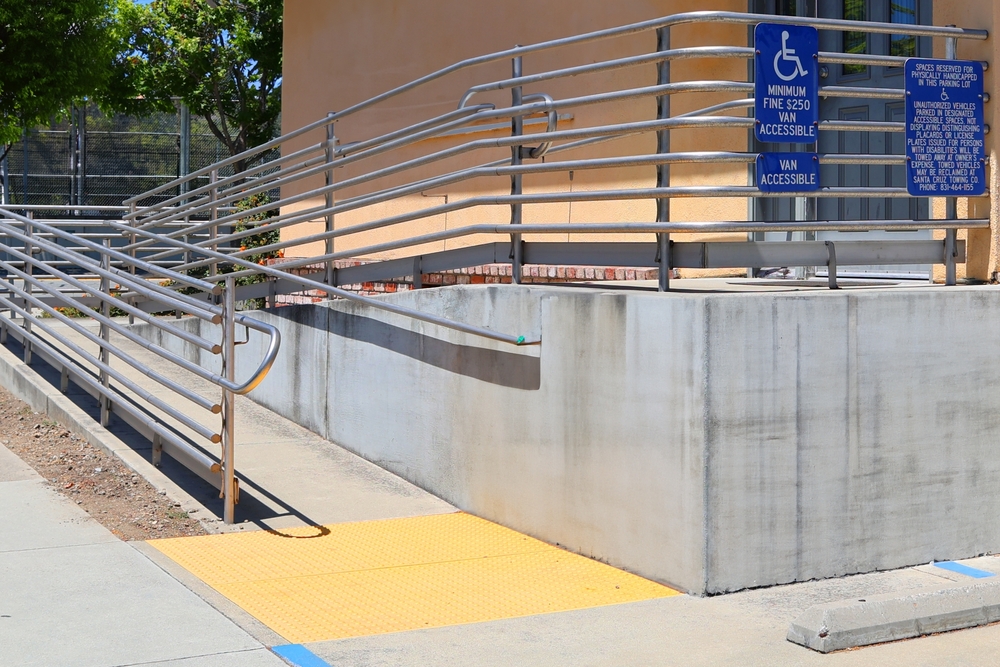

For businesses and organizations, maintaining safe walkways is about more than keeping a property looking clean and professional. Public and private offices, storefronts, schools, medical facilities, and other buildings need accessible paths that allow people to enter and move through the property safely.
When concrete begins to crack, settle, or shift, those accessible routes can become difficult to navigate. Unlevel concrete can create changes in elevation and potential trip hazards, while cracked concrete can make an otherwise usable walkway more difficult to navigate.
For property owners and managers, regular inspections and timely concrete repair are important parts of maintaining safe, accessible properties. In some situations, concrete leveling with polyjacking can help restore settled walkways and address the conditions that contribute to accessibility concerns.
What Does ADA Compliance Mean for Walkways?
The Americans with Disabilities Act (ADA) establishes accessibility requirements for many public accommodations and commercial facilities. Among other requirements, the ADA Standards address accessible routes, including the characteristics of ramps, walking surfaces, changes in level, and other elements people use to access buildings and facilities.
For example, the 2010 ADA Standards state that changes in level on ramp landings are not permitted, with a limited exception for slopes no steeper than 1:48.The exact accessibility requirements that apply to a property depend on the type of facility, the work being performed, and other factors.
Concrete leveling alone does not make a property ADA-compliant, and property owners should work with qualified accessibility professionals when determining whether their property meets applicable requirements. However, maintaining the physical condition of walkways is an important part of keeping accessible routes usable.
How Unlevel Concrete Can Create Accessibility Concerns
Concrete doesn’t necessarily become uneven overnight. Soil beneath a slab can settle or shift over time, while moisture and erosion can create voids that leave portions of the slab without adequate support.
Eventually, you may notice:
- A sidewalk section sitting higher than the next
- A walkway that slopes unexpectedly
- Cracks between concrete slabs
- Gaps underneath a slab
- Sunken sections near entrances
- Uneven transitions between parking areas and sidewalks
- Water pooling around a walkway
For someone without a disability walking, a small elevation change may be noticeable. For someone using a wheelchair, walker, cane, or other mobility device, the same condition can create a much more significant obstacle.
Pro Polyjacking has previously discussed how polyjacking can reduce trip hazards in public spaces, including sidewalks, parking garages, schools, parks, and commercial properties.
Why Cracked Concrete Shouldn’t Be Ignored
A crack doesn’t automatically mean a walkway is inaccessible or that the entire slab needs to be replaced. However, cracked concrete deserves attention, particularly when it is accompanied by settlement or an elevation change.
Concrete cracks for several reasons: the concrete may be affected by soil movement, erosion, improper installation, tree roots, weather conditions, or other factors. When a crack develops between slabs, one section may eventually sit higher or lower than the other.
A walkway with deteriorating concrete can create trip hazards, make access more difficult, and contribute to larger maintenance problems if the underlying cause isn’t addressed. Our recent discussion of concrete leveling versus replacement explains that the appropriate solution depends on the condition of the existing concrete.
How Concrete Leveling Can Help
If concrete has settled but remains structurally sound, concrete leveling may be an option for restoring the slab.
Polyjacking works by injecting high-density polyurethane foam beneath sunken concrete. The foam expands into voids below the slab, helping lift and stabilize the concrete. The goal isn’t simply to make a walkway look level. Polyjacking addresses the space beneath the concrete, helping provide additional support where soil has shifted or settled.
This can make polyjacking a useful option for certain commercial accessibility projects where existing concrete is salvageable and needs to be restored. Pro Polyjacking provides commercial and industrial concrete leveling throughout the Kansas City area, including services for commercial properties, parking areas, sidewalks, and other concrete surfaces.
Commercial Properties Have More to Consider
For a homeowner, an uneven sidewalk can be inconvenient. For a business or public facility, the implications can be much greater. Customers, employees, students, patients, vendors, and visitors may all use the same walkways throughout the day. A single damaged section of concrete can become a problem for anyone who has difficulty navigating uneven surfaces.
This is especially important for:
Offices
Employees and visitors need safe routes between parking areas, entrances, and other areas of the building. Walkways that have settled over time should be inspected regularly.
Storefronts
A customer’s experience can begin before they even enter the building. Uneven sidewalks, damaged entryways, or sunken concrete around the storefront can affect both safety and accessibility.
Schools
Students, teachers, staff, and visitors may use sidewalks and walkways throughout the property. Pro Polyjacking has experience repairing concrete at schools, including a preschool sidewalk leading to a playground. In that project, the team assessed the slope of the walkway and used polyjacking to address the trip hazard.
Medical and Healthcare Facilities
Accessibility is particularly important around medical facilities because patients and visitors may already have mobility limitations. Walkways, entrances, parking areas, and ramps should be regularly inspected for changes that could make navigation more difficult.
Municipal and Public Properties
Public parks, community buildings, parking structures, and other municipal properties experience constant foot traffic. Maintaining their concrete surfaces can reduce hazards for those who frequent these types of properties.
Concrete Leveling vs. Concrete Replacement
When a walkway becomes uneven, property owners may immediately assume the concrete needs to be demolished and replaced. If the existing slab is still structurally sound, concrete leveling may provide an alternative to complete replacement.
Polyjacking can lift settled slabs without removing the entire section of concrete, which can mean less disruption for a business or organization. However, severely deteriorated concrete may not be a good candidate for leveling. Concrete that is severely crumbling, extensively damaged, or compromised by other structural problems may require replacement.
Pro Polyjacking’s concrete repair services are designed to help property owners determine whether existing concrete can be repaired or whether replacement is more appropriate.
Don’t Forget About the Areas Around Your Walkway
Maintaining an accessible walkway isn’t just about looking at the concrete itself. Property owners should also pay attention to the conditions surrounding it.
Water that consistently collects near a walkway may indicate drainage problems or soil erosion. Soil movement can eventually leave voids beneath concrete, contributing to settlement. Changes in landscaping can also affect drainage around sidewalks and entrances. Tree roots, irrigation, heavy rainfall, and seasonal changes can all contribute to conditions that affect concrete over time.
Regular property inspections can help identify these problems before they create more significant concerns.
A Proactive Approach to Concrete Repair
Waiting until someone trips or struggles to navigate a walkway isn’t the best way to approach property maintenance. Instead, property owners and facility managers should periodically inspect concrete around entrances, sidewalks, parking lots, ramps, and other accessible routes.
Look for:
- New or widening cracks
- Uneven transitions between slabs
- Sunken concrete
- Standing water
- Gaps beneath slabs
- Changes in slope
- Deteriorating edges
- Areas that feel unstable when walked across
If you notice unlevel concrete, it’s worth scheduling an evaluation. A professional can help determine whether the issue is related to soil settlement, erosion, drainage, or another cause.
Keeping Walkways Safer and More Accessible
ADA compliance involves much more than concrete, and concrete leveling should never be viewed as a guarantee that a property meets every applicable ADA requirement. Property owners should consult the current ADA Standards and qualified accessibility professionals when evaluating compliance.
Still, maintaining safe, stable walking surfaces is an important part of responsible property management.
Cracked concrete, uneven slabs, and unlevel concrete can create trip hazards and make navigating a property more difficult. When the existing concrete is a good candidate for repair, polyjacking can provide a way to lift and stabilize sunken slabs while minimizing the disruption associated with full replacement.
Pro Polyjacking has more than 30 years of experience helping homeowners, businesses, schools, and public properties throughout the Kansas City area with commercial concrete leveling and other concrete services. If you have uneven sidewalks, cracked walkways, or another accessibility concern, contact Pro Polyjacking to schedule an inspection and learn whether polyjacking could be the right concrete repair solution for your property.