
Driveway Leveling & Polyjacking
A sinking or uneven driveway can create trip hazards, rough vehicle transitions, drainage problems, and visible gaps between concrete slabs. Pro Polyjacking provides professional driveway leveling throughout the Kansas City area using lightweight polyurethane foam to fill underground voids, stabilize loose soil, and carefully raise settled concrete. Compared with traditional mudjacking, polyjacking adds far less weight beneath the slab and provides a faster, water-resistant solution for restoring structurally sound driveways.
"WHAT IS IT?"
Why a Sunken Driveway Can Become a Serious Problem
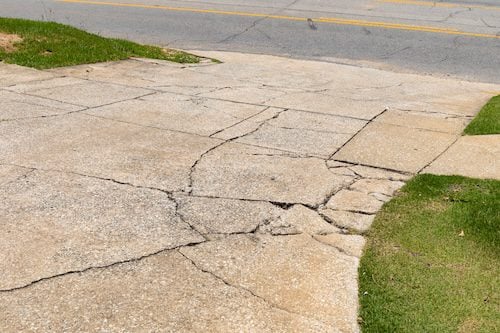
A sunken driveway usually develops when the soil beneath the concrete loses volume, shifts, erodes, or was not properly compacted before the slab was poured. This is especially common throughout the Kansas City area, where expansive clay soils can swell during wet periods and shrink significantly during hot, dry weather. Heavy rain, poor drainage, leaking downspouts, water moving along slab edges, and winter freeze-thaw cycles can create additional movement and gradually open voids beneath the driveway. As individual sections settle, uneven joints can create uncomfortable transitions for vehicles, trip hazards for pedestrians, low spots where water collects, and slopes that direct runoff toward the garage or foundation instead of away from the property. Continued settlement can also increase stress on the concrete and contribute to cracking along unsupported sections. Water entering those cracks and joints may then accelerate erosion beneath the slab, making the problem progressively worse. Professional sunken driveway repair addresses the loss of support beneath the concrete instead of simply filling surface cracks, making it possible to restore structurally sound slabs before the settlement leads to more extensive damage or full replacement.
"WHen to MUDJACK?"
Why Polyjacking Is Better Than Mudjacking for Driveway Leveling
Traditional mudjacking can raise a settled driveway, but it relies on a heavy slurry of water, soil, and cement. Pro Polyjacking reports that cured mudjacking material weighs approximately 100 pounds per cubic foot, while polyurethane foam weighs only about 2 to 4 pounds per cubic foot. That difference is particularly important during concrete driveway leveling because the underlying soil has already demonstrated that it is struggling to support the weight above it. Adding a large volume of heavy slurry places additional load on weakened soil, while polyurethane can provide the lifting force needed to restore the driveway with only a fraction of the added weight.
Polyurethane is also better suited to the moisture conditions that frequently contribute to driveway settlement throughout Kansas City. As the foam is injected beneath the slab, it expands within seconds, fills empty spaces, compresses loose soil, and creates support beneath the concrete. The foam is hydrophobic, meaning water cannot wash it away the way groundwater and runoff can gradually erode soil-based mudjacking material. This makes polyurethane driveway lifting particularly effective in areas where spring rain, summer drought, expansive clay, drainage problems, and winter freeze-thaw cycles continually affect soil conditions beneath exterior concrete.
Polyjacking also provides a cleaner and much faster approach to driveway leveling. Traditional mudjacking typically requires holes approximately 1⅝ to 2 inches in diameter, leaving large patched areas visible across the surface. Polyurethane can be injected through approximately dime-sized holes, helping preserve the appearance of the driveway after the repair is complete. Pro Polyjacking also states that polyurethane-treated concrete can generally return to use in about 15 minutes, while mudjacking commonly requires 24 to 72 hours before vehicles can safely return to the slab. For Kansas City homeowners who want less disruption, less added weight, and better resistance to water, polyjacking offers clear advantages over traditional mudjacking.

Frequently Asked Questions About Driveway Leveling
What causes concrete driveways to sink in Kansas City?
Concrete driveways usually sink when the soil beneath them settles, shrinks, erodes, or was not properly compacted. Kansas City’s expansive clay soils can repeatedly swell when wet and contract during dry weather, while heavy rainfall, poor drainage, and freeze-thaw cycles can create additional movement beneath the slab. Over time, these conditions can leave unsupported areas beneath the concrete and cause individual driveway sections to settle unevenly.
Can a sunken driveway be repaired without replacing the concrete?
Yes, in many cases. If the slab itself remains structurally sound, sunken driveway repair can often be completed by injecting polyurethane foam beneath the concrete. The expanding material fills underlying voids, helps stabilize loose soil, and carefully raises the settled slab toward its proper position. Concrete that is badly deteriorated or broken into numerous pieces may be a better candidate for replacement.
Is polyjacking better than mudjacking for concrete driveway leveling?
Polyjacking offers several advantages for concrete driveway leveling. Polyurethane foam weighs dramatically less than mudjacking slurry, resists water, requires much smaller injection holes, and cures within minutes instead of days. Because it also expands into voids and helps stabilize loose material beneath the slab, it is especially useful where shifting Kansas City soils or water movement contributed to the original settlement.
How soon can I drive on my driveway after driveway lifting?
Polyurethane cures very quickly. Pro Polyjacking states that concrete treated with polyurethane can generally return to use in about 15 minutes, compared with approximately 24 to 72 hours for traditional mudjacking. That fast cure time makes polyurethane driveway lifting especially convenient for homeowners who want to avoid leaving vehicles parked on the street for several days.