
Pool Deck Leveling
An uneven or sinking pool deck can create trip hazards, drainage problems, and unsightly gaps around your pool. Pro Polyjacking provides professional pool deck leveling throughout the Kansas City area using lightweight polyurethane foam to raise settled concrete, fill hidden voids, and stabilize the soil underneath. Compared with traditional mudjacking, polyurethane offers a faster, cleaner, and more water-resistant solution for restoring concrete around swimming pools.

"WHAT IS IT?"
Why a Sunken Pool Deck Can Become a Serious Problem
A sunken pool deck is more than a cosmetic issue. When the soil beneath concrete settles, washes away, shrinks, or shifts, sections of the pool deck can drop out of position and create uneven transitions between slabs. Around Kansas City, this can be especially common because expansive clay soils repeatedly swell during wet periods and contract during hot, dry weather, while winter freeze-thaw cycles add even more movement. Pool areas also experience frequent exposure to water from splashing, rain, drainage, and nearby landscaping, which can contribute to erosion and void formation beneath the concrete. As settlement progresses, uneven slabs can create trip hazards for people walking barefoot around the pool, interfere with proper drainage, open gaps between the deck and pool structure, and place additional stress on already weakened concrete. Water can then enter those gaps and contribute to continued soil movement beneath the slab. Professional sunken pool deck repair addresses the problem from below by restoring support beneath the concrete and raising settled sections before the unevenness becomes more severe.
"WHen to MUDJACK?"
Why Polyjacking Is Better Than Mudjacking for Pool Deck Repair
Traditional mudjacking can raise settled concrete, but the material it uses is not always ideal for a pool environment. Mudjacking pumps a heavy slurry of water, soil, and cement beneath the slab. According to Pro Polyjacking, cured mudjacking material weighs roughly 100 pounds per cubic foot, while polyurethane foam weighs only about 2 to 4 pounds per cubic foot. If the soil beneath a pool deck has already settled or lost its ability to support the concrete, placing a large amount of additional weight on that same soil can contribute to future movement. Polyurethane provides the lifting force needed for pool deck lifting while adding far less weight to the weak ground below.
Water resistance is another major advantage for concrete pool deck repair. Polyurethane foam is hydrophobic, meaning it resists water and does not rely on a soil-based slurry that can gradually erode as moisture moves beneath the slab. This is especially valuable around swimming pools, where concrete is routinely exposed to splashing, rainwater, drainage, and moisture in the surrounding soil. As polyurethane expands beneath the deck, it fills voids and compresses loose soil while carefully lifting the concrete back toward the desired position. That combination of void filling and soil stabilization gives polyjacking an important advantage in an environment where water may have contributed to the settlement in the first place.
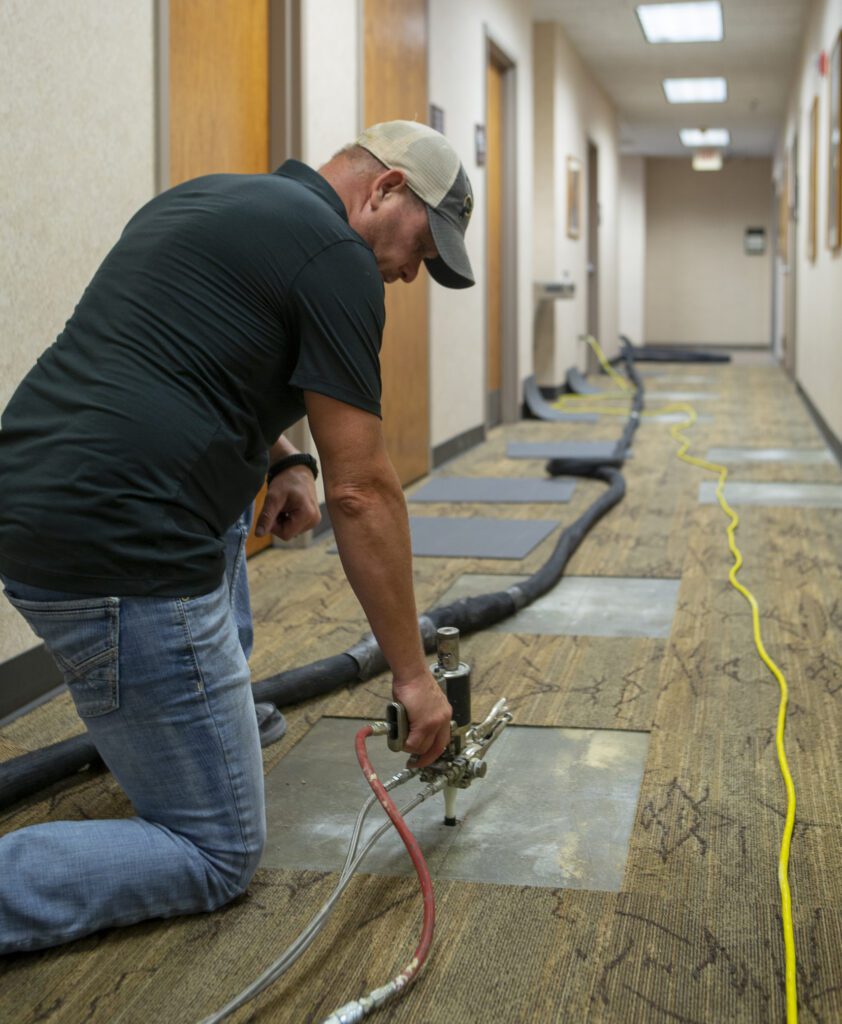
Polyjacking also creates less visible disruption to the pool deck. Traditional mudjacking typically requires holes approximately 1⅝ to 2 inches wide, while polyurethane can be injected through dime-sized openings. For decorative or highly visible pool decks, those smaller repair points help preserve the appearance of the existing concrete. Polyurethane also expands and cures within minutes, with Pro Polyjacking indicating that treated slabs can typically return to use in about 15 minutes, compared with 24 to 72 hours for mudjacking. For Kansas City homeowners looking for pool deck leveling with minimal downtime, less surface damage, and better resistance to moisture, polyurethane provides a more modern approach to lifting settled concrete.

Frequently Asked Questions About Pool Deck Leveling
What causes a pool deck to sink?
A pool deck can sink when the soil underneath loses volume or support. In the Kansas City area, expansive clay can swell during wet conditions and shrink during dry weather, while heavy rain, poor drainage, erosion, and freeze-thaw cycles can create additional movement beneath the concrete. Water around a pool can also find its way beneath slabs and enlarge existing voids.
Can polyurethane be used for sunken pool deck repair?
Yes. When the concrete itself remains structurally sound, polyurethane injection can be an effective method of sunken pool deck repair. Foam is injected beneath the affected slab, where it expands to fill voids, stabilize loose soil, and carefully raise the concrete back toward the proper elevation.
Is polyjacking better than mudjacking for concrete pool deck repair?
Polyjacking offers several advantages for concrete pool deck repair, especially in areas exposed to moisture. Polyurethane is significantly lighter than mudjacking slurry, is hydrophobic, requires smaller injection holes, and cures much faster. These qualities make it especially well suited for pool decks where water and weak soil may have contributed to the original settlement.
How quickly can I use my pool deck after pool deck lifting?
Polyurethane cures very quickly. Pro Polyjacking states that concrete raised with polyurethane can generally return to use in about 15 minutes, whereas mudjacking typically requires 24 to 72 hours of cure time. This makes pool deck lifting with polyurethane especially convenient when you want to minimize downtime around your pool.