

Have you noticed that some concrete surfaces around your home are showing signs of wear and tear? Whether your driveway, pool deck, patio, or sidewalks are starting to crumble, crack, or have uneven areas, it’s time to consider concrete repair. Though concrete is one of the strongest manmade materials, it will break down over time, especially when exposed to rain, snow, summer heat, and winter.
Though concrete can weaken over time, it’s important to repair it immediately to prevent injury and further damage to surrounding surfaces and your home. Continue reading to learn all about Polyjacking, the best concrete leveling method, and how it may just be the best concrete repair method for your needs and budget.
What is PolyJacking?
Although concrete is known for its strength and durability, the soil supporting it can change over time. Factors like water intrusion, natural ground settlement, and tree roots can weaken the foundation beneath the slab, causing the concrete to crack, sink, or become unlevel. These issues not only affect the appearance of your property but can also cause tripping hazards. Polyjacking addresses the underlying cause by reinforcing the soil and restoring the slab to its original height, resulting in a stable, attractive surface that enhances both safety and curb appeal.
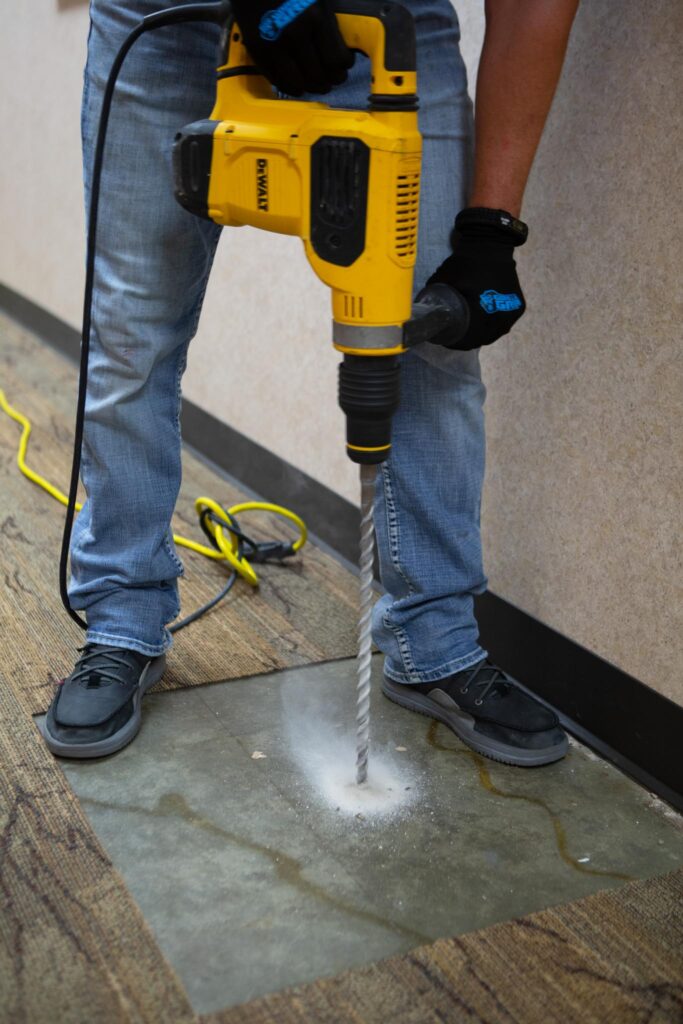
Polyjacking is a reliable, long-term solution for repairing sunken or uneven concrete. The polyjacking process involves injecting expanding, high-density polyurethane foam beneath the affected slab, raising it to its original position. As the foam expands, it fills voids, stabilizing the underlying soil and carefully lifting the concrete back into its proper position to create a safe, even surface.
Polyjacking FAQs
At Pro Polyjacking, we’re often asked tons of questions about polyjacking: about its effectiveness, durability, downtime, etc. Below are just some of the many common FAQs about polyjacking:
Q: What can polyjacking be used for?
A: Polyjacking is an effective solution for raising and stabilizing cracked or sunken concrete in a wide variety of applications. Our high-strength polyurethane foam is lightweight yet durable enough to lift and support everything from residential surfaces to large commercial and industrial slabs. It can be used on the following: driveways, sidewalks, patios, pool decks, parking decks, garage floors, basement slabs, foundations, farm silos, heavy equipment foundations, and many other types of concrete surfaces and structures that have settled over time.
Q: How long does polyjacking last?
A: Polyjacking is a long-term concrete leveling solution, lasting much longer than other methods like mudjacking. Its longevity can’t be beat, stabilizing the soil and concrete with zero structural compromise. Other concrete repair methods like mudjacking require frequent maintenance because it relies on the underlying soils for stability, which get damaged and washed away from exposure to water and severe weather conditions.
Q: What are some signs I need polyjacking?
A: While sunken concrete is a sign you need polyjacking, there are many other signs you need immediate concrete repair. Some other signs include: water remains on concrete for long periods, the concrete is cracked, the pooling water is a slip hazard, water pools near the home’s foundation, and pooling water is growing larger/deeper.
Q: When is the best time to schedule polyjacking?
A: You can schedule polyjacking anytime! Our team can inject polyurethane foam in any season; our polyurethane foam will expand and cure regardless of the season, allowing you to use the concrete shortly after.
Polyjacking vs. Other Concrete Repair Methods
Mudjacking
Polyjacking differs from mudjacking in several ways. For one, the polyurethane foam injected under sunken concrete is powerful yet lightweight, compared to heavy mudjacking materials. Next, mudjacking relies on heavy materials that can stress the ground, while polyjacking uses a smarter, lighter, longer-lasting solution that is chemically inert. Polyjacking requires discreet holes to inject polyurethane foam beneath slabs, while mudjacking requires larger holes and a hydraulic pump. Mudjacking is only a short-term solution, while polyjacking is the most permanent solution that fortifies the soil, ensuring the concrete won’t ever sink again.
DIY Concrete Leveling
Attempting a DIY concrete leveling job poses safety risks and, in most cases, costs you more in the long run if the job is done incorrectly. From safety risks to uneven concrete leveling, soil/concrete destabilization, and miscalculations, a lot can go wrong when attempting a DIY concrete leveling project. It’s best to avoid DIY concrete leveling and opt for a safer, more durable option like polyjacking.
While other concrete repair methods exist, polyjacking is the best method for your home or business. Because our polyurethane foam expands, filling voids in the underlying soil, it applies controlled upward pressure to raise the slab back to its original elevation, eliminating gaps and cracks.
Choose Pro Polyjacking for Your Concrete Repair
If you need sunken or cracked concrete repaired, hiring Pro Polyjacking is the best solution. We have over 30 years of industry experience and have been serving Kansas City homeowners and commercial property owners for decades. We’re a woman- and family-owned local business with positive reviews and thousands of satisfied customers. Below are some of our customer reviews:
Pro Polyjacking can help with all commercial and residential concrete leveling needs in and around Kansas City, including residential concrete leveling, commercial and industrial concrete leveling, concrete sealing and cleaning, deep injection, joint and crack repair, and farm silo polyjacking. Get started by requesting a quote today!