
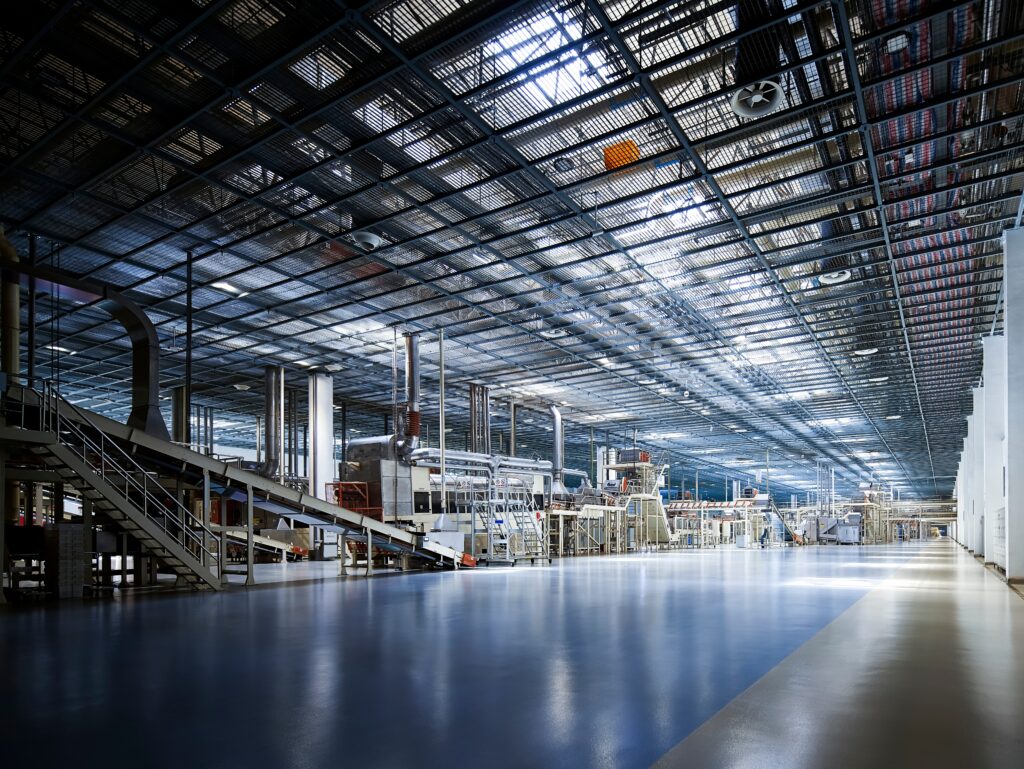

Industrial settings are constructed differently from traditional commercial buildings, as they require specific building codes and standards that ensure proper anchorage and machinery-specific support are enforced. Oftentimes, industrial settings that house heavy machinery require a robust, specifically engineered foundation that can support the weight of the heavy machinery inside the building.
Whether you own an industrial company, are in the process of building one, or are renting an industrial building, continue reading to learn more about the importance of a strong foundation to support machinery and equipment and a solution for fixing it when it develops cracks or structural damage.
What is a Heavy Machinery Foundation?
Various buildings have different foundations, including slab-on-grade, individual footings, pier foundations, deep foundations, and mat/raft foundations. Not all foundations are the same – they exist to support and hold the weight of the building materials and equipment inside the building. Choosing the best foundation is specific to the company’s needs, the weight of the equipment inside, and soil conditions.
There are many types of foundations available, but industrial settings with heavy machinery require a heavy machinery foundation. A bedrock for supporting the heavy machinery inside the industrial building, heavy machinery foundations are built to support extreme static weight and withstand mitigating vibrations from the heavy machinery.
Unfortunately, some heavy machinery foundations aren’t up to code and have pitfalls in installation, like unlevel concrete, underestimating load requirements, and concrete pouring issues. Others might withstand damage from soil erosion and other natural causes. Whatever the case, a heavy machinery foundation must be free of cracks and unlevel concrete to support the weight, and repairs should be made immediately.
How to Repair a Heavy Machinery Foundation
Repairing cracks or unlevel concrete in a heavy machinery foundation is crucial to keep employees and the general public safe and to support the weight of the equipment inside. Below are some tips for repairing a heavy machinery foundation:
Anchor Repair
Industrial buildings often have anchor bolts to secure heavy structures or machinery. Whether used to secure structural steel columns, heavy machinery bases, or building frames, anchors can loosen, corrode, or even crack, putting your employees, machinery, and the building at risk of serious injury and damage. These anchors can be repaired or replaced, depending on the severity, and should be done as soon as possible.
Underpinning
For heavy machinery foundations with poor soil conditions that have caused settlement issues or realizing the weight of the building is more robust than intended, underpinning can be a great repair method. Repairs could include micropiles, jet grouting, or mass concrete underpinning.
Mudjacking
Mudjacking is a technique used to raise sunken concrete by pumping a mixture beneath the affected area. Contractors drill small holes into the slab and use hydraulic equipment to inject the mixture. While it can lift sinking and cracked concrete, it’s a quick fix that requires maintenance.
Polyjacking
The best and most permanent concrete leveling technique, polyjacking, involves drilling small holes— the size of a dime—into the concrete slab and injecting foam beneath it, quickly leveling the surface within minutes. Polyjacking heavy machinery foundations is the best method because it stabilizes the soil underneath a heavy machinery foundation, ensuring it never sinks again. Though polyurethane foam is lightweight, it’s durable enough to support heavy machinery equipment, mitigating vibrations, and supporting static weight.
Benefits of Polyjacking Heavy Machinery Foundations
Did you know that polyurethane foam offers advantages over other methods for heavy machinery foundation lifting and repair? Here are several benefits of using polyurethane foam in this process:
- It expands beneath the concrete
- It resists water, so it doesn’t swell or shrink when exposed to moisture
- It requires no ongoing maintenance once applied
- It’s lightweight, reducing stress on the foundation
- Only a small, dime-sized hole is needed for injection, unlike mudjacking, which involves larger, more noticeable holes
- It is environmentally friendly
- The process is cleaner and less messy compared to other concrete leveling options
These are just a few reasons why polyurethane foam is preferred. One of its greatest advantages is its exceptional durability.
Trust Pro Polyjacking, Kansas City’s Premier Polyjacking Company for Over 30 Years, for Your Industrial Building
For polyjacking for commercial and industrial concrete leveling, trust the pros at Pro Polyjacking. Our process for polyjacking commercial and industrial spaces stabilizes the soil, lifts concrete, eliminates cracks, and levels your concrete structures, keeping employees and the general public safer.
Cracks, unlevel spots, spalling, and other damages are unsightly, especially if they go unrepaired. Trust the team at Pro Polyjacking in Kansas City for your concrete repair now, regardless of the season. Contact our team for more information about polyjacking heavy machinery founadtions!