
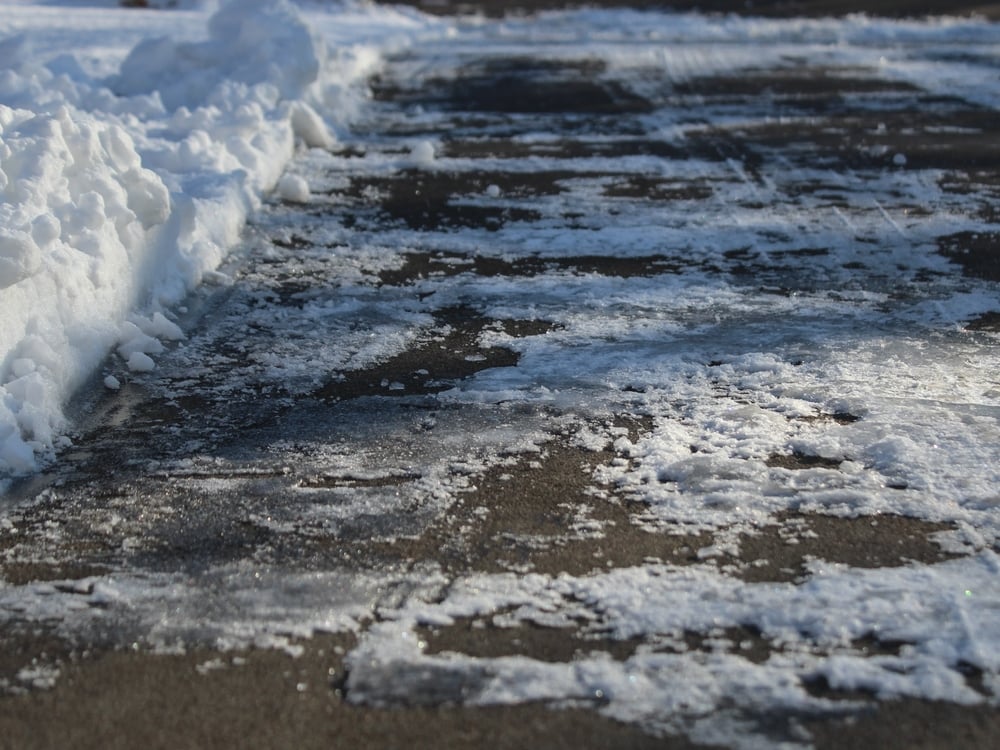

Winter in Kansas City can be hard on concrete. Between freezing temperatures, moisture, snow, ice, and repeated freeze-thaw cycles, the conditions that already affect your concrete can become more noticeable as the season progresses.
If you have cracked concrete, uneven concrete, or an unlevel driveway or sidewalk, waiting until spring may mean dealing with a larger repair later. While winter weather doesn’t automatically cause every concrete problem to worsen, moisture and temperature changes can put additional stress on concrete and the soil supporting it.
Fall is a good time to take a closer look at your concrete and address problems before winter arrives. At Pro Polyjacking, we help homeowners and businesses restore sunken and unlevel concrete with polyurethane foam. Taking care of a problem early can help you avoid allowing a relatively manageable repair to become a more extensive project.
Why Winter Can Be Hard on Concrete
Concrete itself is a durable material, but the conditions surrounding it can affect its long-term performance. Moisture is one of the biggest concerns; water can enter existing cracks and the soil beneath concrete. When temperatures drop below freezing, that moisture can freeze and expand. As temperatures rise again, it thaws. Repeated cycles of freezing and thawing can contribute to movement and deterioration.
Kansas City’s weather can make these changes particularly important to consider. Pro Polyjacking notes that seasonal changes, moisture, and shifting soil can contribute to concrete settlement and cracking.
If your driveway, sidewalk, patio, or other slab already has a problem, winter may not be the best time to ignore it.
Small Cracks Can Become Bigger Concrete Problems
Not every crack means that your concrete needs to be replaced. However, cracked concrete shouldn’t automatically be dismissed as nothing to worry about.
A crack can allow moisture to reach areas beneath or within the slab. If the supporting soil is already settling or eroding, additional moisture and seasonal changes may contribute to further movement.
You may also notice that a crack is accompanied by:
- One side of the slab sitting higher than the other
- A sunken section of driveway
- Gaps beneath a concrete slab
- Water collecting around the damaged area
- An uneven transition between slabs
- A sidewalk becoming difficult to walk across
These signs can point to a larger settlement issue rather than a surface crack alone.
Pro Polyjacking offers crack repair services using high-density polyurethane to repair and seal cracks while helping restore stability to the concrete surface.
Why Waiting Until Spring Can Cost More
It’s tempting to put off concrete repair when the problem seems minor. After all, if your driveway is still usable and your sidewalk isn’t causing immediate problems, why not wait?
The problem is that you can’t always tell how much a concrete issue may change over the course of a season. A small crack may remain relatively stable. In another situation, additional moisture, soil movement, or temperature changes may contribute to more cracking or settlement.
And when concrete becomes more severely damaged, the repair options can change. Addressing a concrete problem while the existing slab is still a good candidate for repair can therefore be an important consideration.
Concrete Leveling Can Address More Than the Surface
If you have uneven concrete, the visible problem may only be part of the story. Concrete often becomes uneven because the soil beneath it has shifted, settled, or eroded. When voids develop below a slab, the concrete can lose the support it needs to remain level.
Simply filling a crack doesn’t correct a slab that has sunk. Pro Polyjacking uses high-density polyurethane foam beneath sunken concrete. The foam expands into voids beneath the slab and helps lift and stabilize the concrete. Our residential concrete leveling service is designed to address settled concrete while reinforcing the soil beneath it, unlike mudjacking that can cause other problems.
If your driveway or sidewalk has become unlevel concrete, it’s worth determining whether the issue is primarily on the surface or underneath the slab.
Why Polyjacking Is an Option for Fall Concrete Repair
Polyjacking is a relatively quick approach to concrete repair that doesn’t require tearing out an entire slab. Rather, the process involves drilling small injection holes into the existing concrete and injecting polyurethane foam underneath. As the foam expands, it fills voids and lifts the slab toward its original position.
One advantage of addressing concrete leveling before winter is that you’re not necessarily waiting for warmer weather to make the repair. We can complete a concrete lifting project in cold weather because it cures through a chemical reaction rather than relying on a water-based slurry. That means homeowners don’t necessarily have to wait until spring to address a sinking driveway or walkway.
What to Look for Before Winter
Before temperatures drop, walk around your property and take a close look at your concrete. Look for the following before winter’s arrival:
Check Your Driveway
Look for cracks, sunken sections, uneven transitions, and areas where water collects.
Inspect Sidewalks and Walkways
Pay attention to raised or lowered sections between slabs. Even relatively small changes in elevation can create trip hazards.
Look at Your Patio
Check for cracks, separation between slabs, and areas that have started to sink.
Check Around Your Home
If concrete near your foundation has settled or shifted, look for gaps, drainage problems, or other changes that may indicate soil movement.
Pay Attention to Water
Water pooling near a concrete slab can be an important clue. Poor drainage can contribute to moisture-related soil movement and concrete deterioration. Pro Polyjacking’s Ground Penetrating Radar services can also help identify what’s happening below the surface when additional investigation is needed.
Concrete Repair Is About More Than Appearance
A driveway with a crack or a slightly uneven sidewalk may not seem like an urgent issue. But unlevel concrete can become a safety concern, particularly in areas with frequent foot traffic. Uneven transitions can create trip hazards, while sinking concrete can affect how water drains across your property.
We’ve previously addressed the potential costs of putting off concrete leveling, including safety concerns associated with uneven sidewalks, driveways, patios, and other surfaces.
Taking care of concrete before winter isn’t about predicting exactly what will happen to your property. It’s about addressing problems you can already see before another season of weather puts additional stress on them.
Don’t Wait Until Spring to Address Uneven Concrete
Spring is a popular time for homeowners to tackle outdoor projects. But by then, winter will already have taken its turn. If you’ve been putting off that driveway crack, sinking sidewalk, or uneven patio, fall can be a good opportunity to have the problem evaluated.
Concrete repair doesn’t always mean complete replacement. Depending on the condition of your slab and what’s happening underneath it, concrete leveling with polyjacking may be an option for restoring stable, level concrete.
Pro Polyjacking has more than 30 years of experience providing concrete leveling and polyjacking services, helping homeowners and businesses address sinking, cracked, and unstable concrete.
Don’t let a small concrete problem become a bigger spring project. Contact Pro Polyjacking to schedule an assessment and learn whether polyjacking is the right concrete repair solution for your property.