Looking for Mudjacking in Overland Park?
You searched for mudjacking — what you probably want is your sunken driveway, walkway, or patio lifted back to level. We do exactly that across Overland Park, using polyurethane foam instead of mud slurry. Here's the difference, what it costs, and why it matters in Johnson County clay.
"Straight Answer"
The Short Version
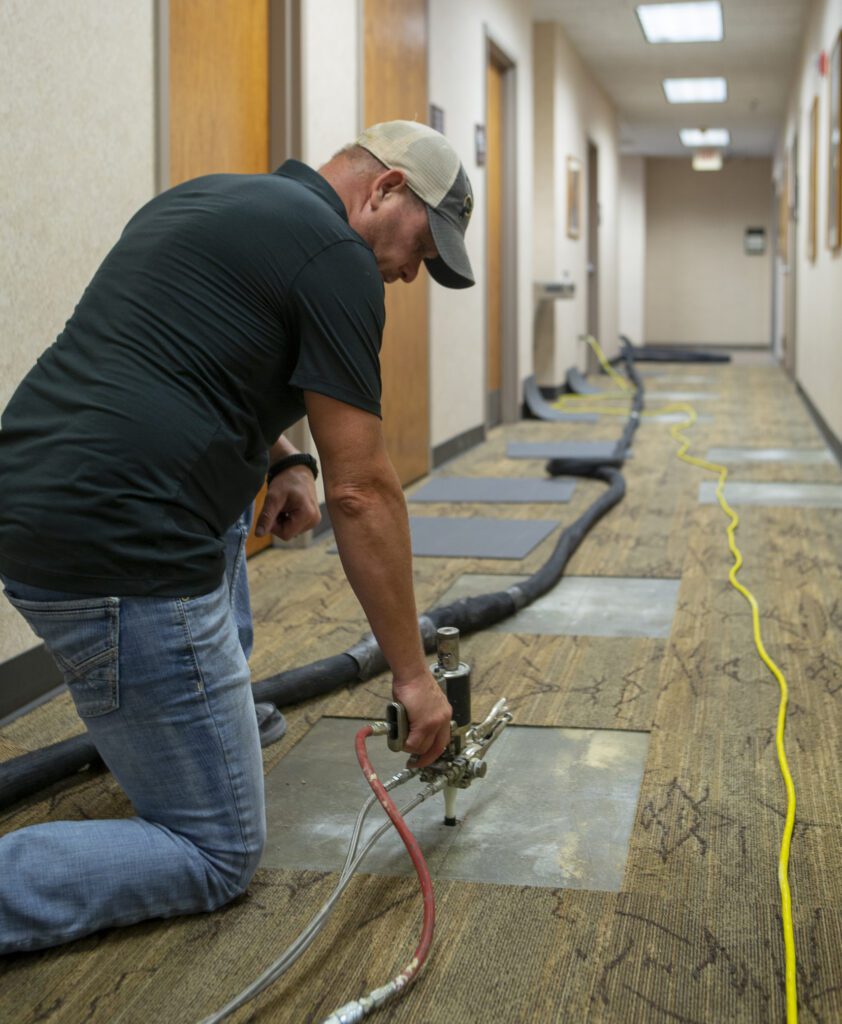
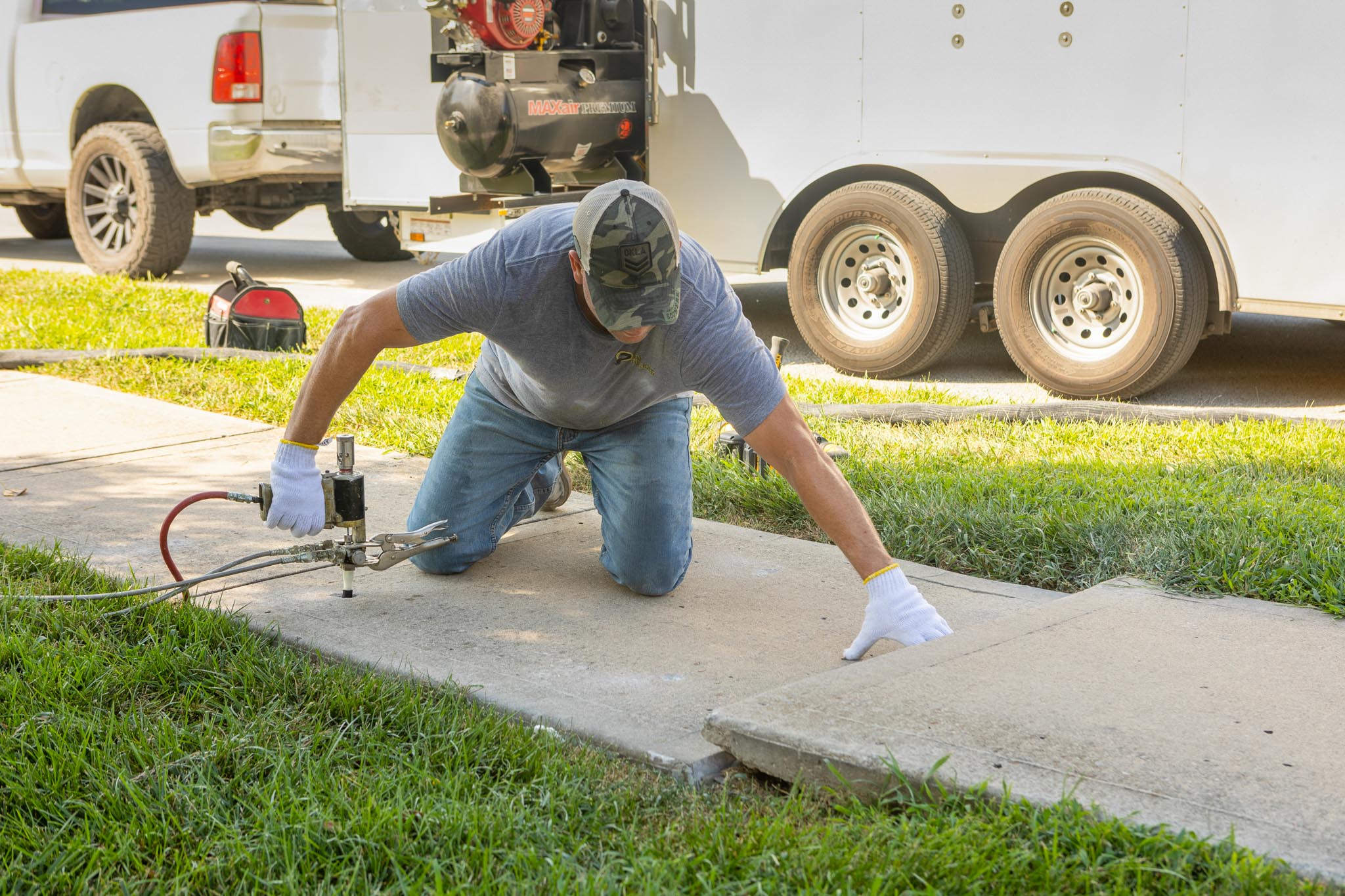
We don't pump mud — we lift concrete with high-density polyurethane foam. Dime-sized holes instead of 2-inch patches, back on your driveway in about 15 minutes instead of 2–3 days, and a material that can't wash out of KC's shifting clay. If you're set on traditional mudjacking, we're not your company. If you want the slab fixed once, keep reading. It's widely available in Kansas City, it costs less than replacement, and when the ground underneath cooperates, it works. The honest question isn't whether mudjacking can lift concrete — it can — it's how long the lift lasts, and what the slurry itself does to soil that has already proven it can't carry the load.
"WHAT's a better option?"
Mudjacking vs. What We Do
| Mudjacking | Polyjacking (what we do) | |
|---|---|---|
| Injection holes | 1⅝ – 2 inches, visible patches | Dime-sized, most people can't find them |
| Back on the slab | 24 – 72 hours | About 15 minutes |
| Material weight | ~100 lbs / cubic foot | 2 – 4 lbs / cubic foot |
| Water resistance | Slurry can erode and wash out | Hydrophobic — works even around wet or submerged concrete |
| Longevity | Commonly 5–10 years, often less in expansive clay | Designed as a long term repair |
| Cost | Often the cheapest option | About the same as mudjacking, or slightly more — and you buy it once |
"Why It's Needed?"
Why Overland Park Concrete Sinks
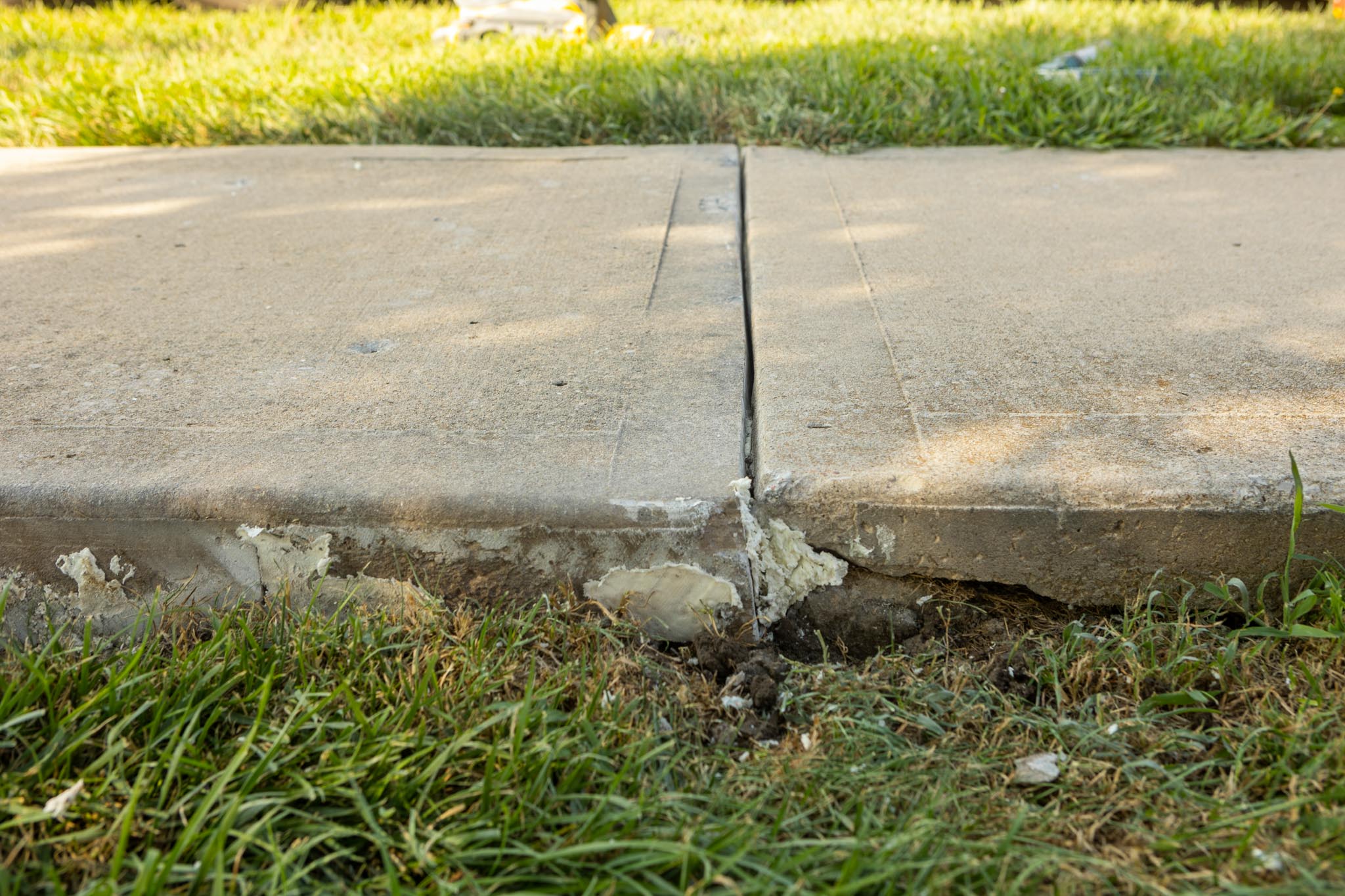
Most of Overland Park sits on expansive clay — soil that swells when it rains and shrinks hard in a dry August. That constant movement opens voids under driveways and patios, and freeze-thaw cycles widen them every winter. In north OP's 1960s–80s neighborhoods, decades of that cycle have had time to work on original slabs; in newer south OP subdivisions, backfilled soil around fresh foundations is still settling into place. Either way, the fix has to account for the soil, not just the slab. That's the core of our case against mud slurry here: adding a hundred pounds per cubic foot to clay that already failed is asking it to fail again. Foam adds almost nothing — and stabilizes the soil it touches. So the real comparison isn't the price — it's what the same money buys: a lift that's commonly repeated within 5–10 years, or one designed to hold for good. Full breakdown in our Kansas City mudjacking cost guide →
Kansas City Mudjacking Questions, Answered Straight
Do you offer mudjacking in Overland Park?
No — we lift concrete with polyurethane instead. Same problem solved, different method: smaller holes, minutes instead of days, and no slurry to wash out. We’re glad to quote your job so you can compare it directly against mudjacking bids.
What does it cost to lift a typical Overland Park driveway?
Prices vary depending on how far it’s settled and how much void there is underneath. Estimates are free and take about 30 minutes on site.
How soon can you get to me?
Most Johnson County estimates within 2–3 business days.
Does foam lifting work in winter?
Yes — polyurethane cures fast even in cold, wet conditions where slurry struggles.
How does your price compare to mudjacking quotes?
Usually closer than people expect — often about the same, sometimes slightly more. And ours is a one-time number: no redo budget, no second appointment in five years. Bring us your mudjacking bids and we’ll put our quote right next to them.