
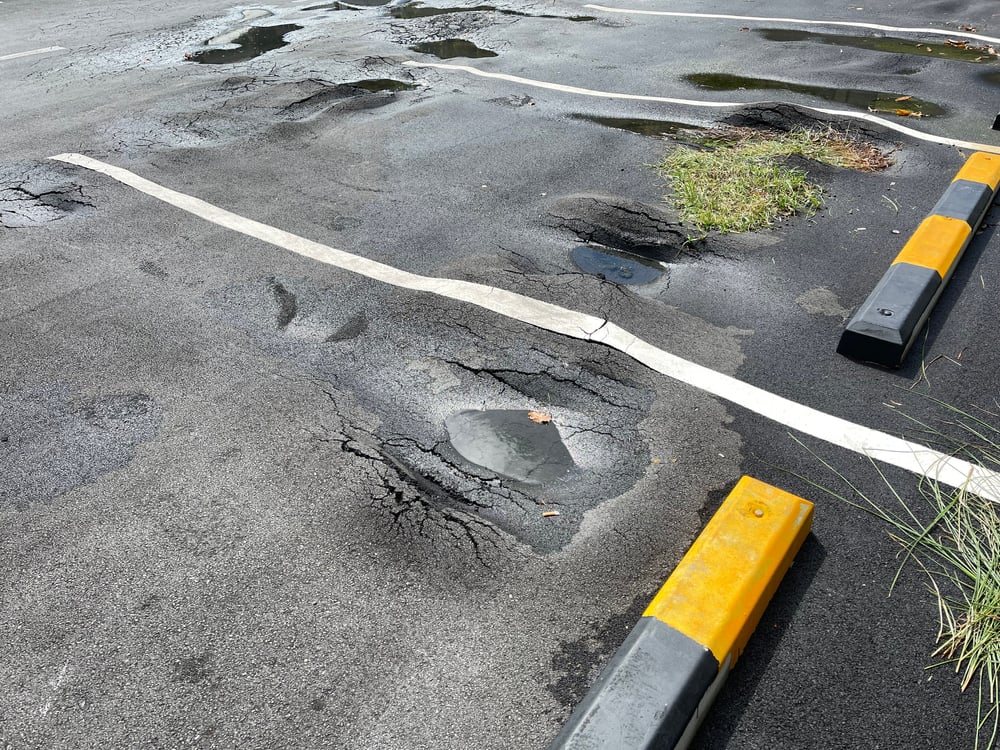

Parking lots and decks allow customers, clients, employees, and the general public to leave their vehicles unattended while visiting your business. Whether you provide free parking or charge a fee, odds are your parking lot gets a lot of traffic from passersby, visitors, and employees coming and going each day.
While parking lots and decks are great additions to any commercial property, municipal building, or private property, they’ll eventually settle and show signs of wear and tear throughout the years. Continue reading to learn why parking lot concrete settles and how to prevent further damage so you can maintain a safe parking lot for easy access.
Why Parking Lot Concrete Settles
Whether your parking lot is a decade or a few decades old, it’s likely got some settling, cracks, or uneven spots. If you’ve wondered how it’s possible, you’ve come to the right place! Below are just some of the many reasons why parking lot concrete settles:
The Wrong Strength Was Used
Your parking lot is a major investment, and using the wrong concrete strength can lead to costly problems down the road. When concrete isn’t strong enough to handle the weight of everyday traffic—delivery trucks, construction vehicles, work vehicles—it can crack and settle, losing its ability to support the pavement properly. Water will seep underneath the surface and weaken the soil and base, causing the concrete to sink, creating potholes, and leading to expensive repairs.
Choosing the right concrete strength and ensuring the base is properly prepared can help protect your investment, prevent premature damage, and keep your parking lot safe and looking great for years to come.
Concrete Dried Too Fast
Concrete needs time to properly cure and develop its strength. When fresh concrete dries too quickly—often from hot weather, low humidity, or freezing temperatures—it can lose moisture before it dries completely. This causes the concrete surface to shrink and develop cracks, leaving the parking lot more vulnerable to water and everyday vehicle traffic. Over time, those small cracks can grow into large areas of deterioration. For business owners, proper curing isn’t just a construction detail; it’s an important step in protecting and prolonging your parking lot investment.
Wrong Control Joints Were Used
Control joints give concrete a planned place to crack as it expands, contracts, and moves with temperature and moisture changes. When control joints are missing or placed incorrectly, the concrete cracks in unpredictable areas instead, settling and causing sections of the parking lot to sink. These cracks allow water to seep beneath the concrete, weakening the surface and soil underneath, causing costly repairs.
Issues with Pouring Concrete
Did you know the way concrete is poured can significantly affect how well the parking lot will hold up throughout the years? If the concrete is placed improperly, overworked, or has too much water in the mixture, it may not develop the strength and durability it needs. Poor pouring practices can also create weak spots and uneven spots throughout the parking lot, causing deterioration and settling. For business owners, proper concrete placement from start to finish can help prevent damage and avoid costly disruptions later on.
How to Prevent Further Damage to a Parking Lot
Preventing further damage to your parking lot is crucial to extending its life and providing a safe place for your guests, clients, employees, and the general public to access your parking lot. So, how can you prevent further damage to a parking lot that’s already settling and deteriorating? The first step is to determine what’s causing the parking lot to settle.
Addressing the underlying cause can help get the necessary repairs to prevent further damage. Contacting a concrete repair company like Pro Polyjacking can determine the cause of settling, ensuring it can be addressed. If the damage is caused by a lack of support beneath the concrete, concrete repair is best to address it. The best concrete repair method is polyjacking, a concrete leveling method that involves injecting polyurethane foam under a concrete slab by injecting the foam under tiny holes. This process stabilizes the soil and, as a result, lifts the concrete to fix cracks and level the concrete.
Why Polyjacking Lasts
Unlike traditional mudjacking, polyjacking involves injecting lightweight polyurethane foam to lift and stabilize the slab without adding significant weight to the underlying soil. The process requires only small, discreet injection holes, compared with the larger holes typically needed for mujdacking. Polyurethane foam also expands into voids beneath the slab, helping restore support and stabilize the area.
At Pro Polyjacking, we’re often asked why polyjacking lasts for so long. Polyjacking is a long-term concrete leveling solution and lasts much longer than other methods. Its longevity is unlike any other, as it stabilizes the soil and concrete with zero structural compromise. Polyjacking lasts for several reasons.
- It fills the voids beneath the concrete
- It’s lightweight
- Polyurethane foam is hydrophobic
- It cures quickly with no downtime
- It’s less susceptible to erosion and washing away like mudjacking materials often do
Restore Your Parking Lot with Polyjacking from Pro Polyjacking
If you need your parking lot repaired, hiring Pro Polyjacking is the best solution, especially compared to other concrete repair methods or concrete replacement. We have over 30 years of industry experience and have been serving Kansas City homeowners and commercial property owners for decades. We’re a woman- and family-owned local business with positive reviews and thousands of satisfied customers. Below are some of our customer reviews:
Pro Polyjacking can help with all commercial and residential concrete leveling needs in and around Kansas City, including residential concrete leveling, commercial and industrial concrete leveling, concrete sealing and cleaning, deep injection, joint and crack repair, and farm silo polyjacking. Get started by requesting a quote today!