

Most homeowners conduct research before making major decisions, especially when replacing or repairing items in/on their home, to ensure they’re choosing the option that best fits their budget and needs. Whether replacing their home’s siding, gutters, building a new deck, or making repairs, there’s a lot to consider before landing on a final decision. The same goes for concrete leveling; comparing all options, understanding the cost of each technique, and assessing their durability are all factors to consider before scheduling your concrete repair service. Continue reading for an in-depth comparison between mudjacking vs. polyjacking to gain a better sense of each, how they’re different, and their longevity.
What is Mudjacking?
Mudjacking is an older concrete leveling method, dating back to the 20th century. Early mudjacking techniques involved pumping mud under sunken or cracked concrete to raise it and level it. As you can imagine, mudjacking isn’t a permanent solution because it can’t withstand frequent water exposure, and dirt and mud aren’t durable. Traditional mudjacking would get washed away, and the concrete would sink again, requiring the process to be repeated.
While the general concept is the same, modern mudjacking still uses a mixture of organic material, including sand and dirt combined with concrete to lift and repair unlevel or sunken concrete. Cement is a durable material, but it deteriorates when exposed to the elements, often cracking in summer and getting damaged during the wintertime. While mudjacking materials can be durable, you’ll need to have the concrete repaired as the slab continues to sink.
Mudjacking is one of the more affordable concrete leveling methods, costing around $3-$6 per square foot. However, it’s a temporary solution that needs to be done over and over again as the concrete sinks once the material is washed away. Mudjacking will also require maintenance as the soil underneath the slab settles, costing you more money in the long run.
What is Polyjacking?
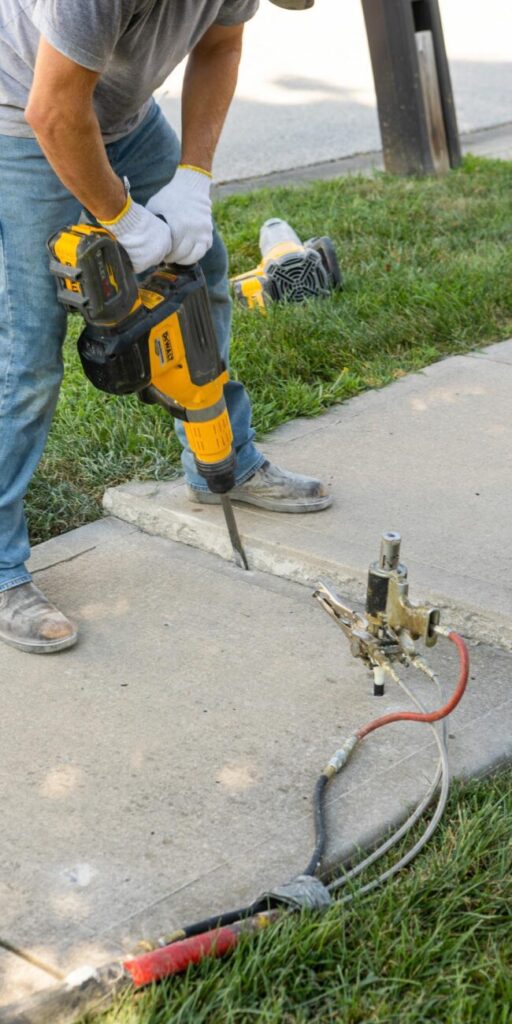
Unlike mudjacking, polyjacking involves injecting polyurethane into sunken or uneven concrete through small holes drilled in the slab. As the foam expands beneath the surface, it fills gaps, strengthens the supporting soil, and gently lifts the concrete back into its proper position. It’s the most durable concrete leveling technique and doesn’t require the same maintenance as mudjacking.
Unlike mudjacking materials, polyjacking uses polyurethane foam, a lightweight foam that expands once it’s pumped under sunken concrete. There’s fascinating science behind polyurethane foam, made especially unique thanks to its durability and long-lasting properties, repairing sunken or cracked concrete in minutes! Unlike mudjacking, polyjacking fortifies the soil under the concrete, ensuring it’ll never sink again and never require maintenance.
While polyjacking costs more than mudjacking up front—anywhere from $5-$25 per square ft—it’s a better long-term investment since it never needs repeating. Because polyurethane foam is water-resistant, expands under the slab, is extremely durable, and fortifies the soil, you’ll save money in the long run, especially as you continue to get your mudjacking redone.
Mudjacking vs. Polyjacking: How they Compare
Now that we’ve explained what polyjacking and mudjacking are, let’s take a look at how they compare in the following categories:
Weight
As you can imagine, concrete mixed with organic matter, such as dirt and water, is heavy, whereas foam is lightweight. The mud/concrete mixture used in mudjacking is very heavy, sometimes weighing hundreds of pounds per cubic foot, whereas polyurethane foam only weighs between 2 and 4 pounds per cubic foot. Because polyjacking materials are more durable and long-lasting, there are no future concrete issues!
Durability
Polyjacking materials are far more durable than mudjacking. Because mudjacking uses concrete and a mixture of water and dirt to lift sunken concrete, it’ll get washed away over time, forcing the slab to sink all over again. However, polyjacking polyurethane foam is a long-lasting solution able to withstand water erosion or other exposures.
Resistance to Water Exposure
There’s no comparison when it comes to resistance to water exposure for polyjacking and mudjacking; mudjacking is easily washed away as it’s exposed to water, while polyjacking is water-resistant, holding firmly at all times, never allowing water to find its way underneath the concrete to cause further issues.
Maintenance
Another clear winner in this category is polyjacking. Because mudjacking materials wash away easily, maintenance is required to lift the concrete once it sinks again. However, polyjacking is the most reliable concrete leveling solution, holding up against the elements. Therefore, mudjacking requires maintenance that polyjacking doesn’t, making polyjacking a clear winner.
Mudjacking and polyjacking differ in several ways, including material weight, durability, water exposure, and maintenance. While mudjacking costs less initially, it’s more expensive because of the required maintenance to prevent it from washing away and keep the concrete lifted.
Ditch Mudjacking and Trust the Pros at Pro Polyjacking
If your concrete is uneven, cracked, or sinking, skipping mudjacking and choosing an experienced polyjacking team makes all the difference. At Pro Polyjacking, we bring more than 30 years of hands-on expertise to projects throughout Kansas City. As a locally owned, woman and family-operated company, we take pride in delivering dependable service backed by strong customer feedback and thousands of successful jobs completed across the area.
Pro Polyjacking can help with all commercial and residential concrete leveling needs in and around Kansas City, including: residential concrete leveling, commercial and industrial concrete leveling, concrete sealing and cleaning, deep injection, joint and crack repair, and farm silo polyjacking. We hold all required licenses and insurance that protects our employees. We also offer a warranty on all our projects, ensuring our customers are left completely satisfied. Get started by requesting a quote today!