

Whether you store goods or equipment, fulfill orders, act as a distribution center, or offer seasonal or bulk storage, warehouses are key to helping companies deliver products faster and keep things running smoothly and efficiently while staying organized. The construction of your warehouse matters; it should have a steel frame for overall structure, insulated panels for temperature control, and concrete floors to handle heavy loads.
Keeping your warehouse in great shape requires maintenance and frequent inspections. From fire safety to equipment maintenance records, warehouse safety is paramount for your employees and your inventory. Concrete flooring is durable and long-lasting, but it can deteriorate over time and will eventually need repair. Continue reading to learn how warehouse floors crack or wear down and when to consider concrete repair.
Why do Concrete Warehouse Floors Crack?
Concrete is a mixture of several components: aggregates such as gravel, sand, or crushed stone, including water and cement. Cement is produced from natural materials such as limestone, marl, or chalk and acts as a binder to keep the aggregates together, ultimately helping the concrete mixture solidify.
So, if concrete is such a strong material, why do concrete warehouse floors crack? There are several reasons why concrete floors may crack:
- The wrong strength was used; your structure might have a weak concrete strength that can’t support heavy machinery.
- The concrete dried too quickly, compromising its strength
- The control joints used during the pouring of the concrete were placed in the wrong spots, forcing it to crack.
- The concrete was poured over frozen ground.
- The concrete was poured on a ground that wasn’t compacted.
Your warehouse floor undergoes repeated stress and fatigue, especially if the wrong strength of concrete was used during the initial pouring. If you do have cracks or unlevel spots in your warehouse flooring, you’ll need to repair them immediately, as cracked concrete floors create trip and fall hazards and may cause you to fail inspection.
Signs It’s Time to Consider Concrete Repair
Whether you have minor or major concrete cracks in your warehouse floor, it’s likely time to get them repaired. Below are some signs it’s time to consider concrete repair:
Widened Cracks
If you’ve noticed a tiny crack in your floor that has since widened and covers more area, it’s time to consider concrete repair to avoid further damage. Cracks that are ignored tend to widen and grow, especially from the weight of heavy machinery.
Uneven Areas
Do you have uneven areas in your warehouse floor? Whether it’s a small, barely noticeable uneven spot or a larger, more noticeable one, getting it repaired sooner rather than later is ideal to prevent further sinking.
Drainage Issues
Have you noticed water pooling on top of certain areas of your concrete floors? If water is taking longer to drain, it’s time to schedule concrete repair. Water that’s left to sit on top of concrete can indicate serious drainage issues.
Equipment Movement Issues
If your machinery is having difficulty moving on your concrete floors, consider concrete repair immediately for the safety of your employees and expensive equipment.
Why Polyjacking for Warehouses is the Best Concrete Repair Method
When considering concrete repair, there are several options: mudjacking, DIY concrete leveling, and polyjacking. DIY concrete leveling comes with many risks and should not be attempted. Mudjacking is a concrete repair method that involves mixing materials, including concrete, dirt, and sand, and pumping the mixture under the cracked and unlevel concrete to lift it. While mudjacking is initially less expensive than polyjacking, it’s a temporary solution that requires frequent maintenance as the concrete will eventually sink again. However, polyjacking is the most permanent concrete leveling method.
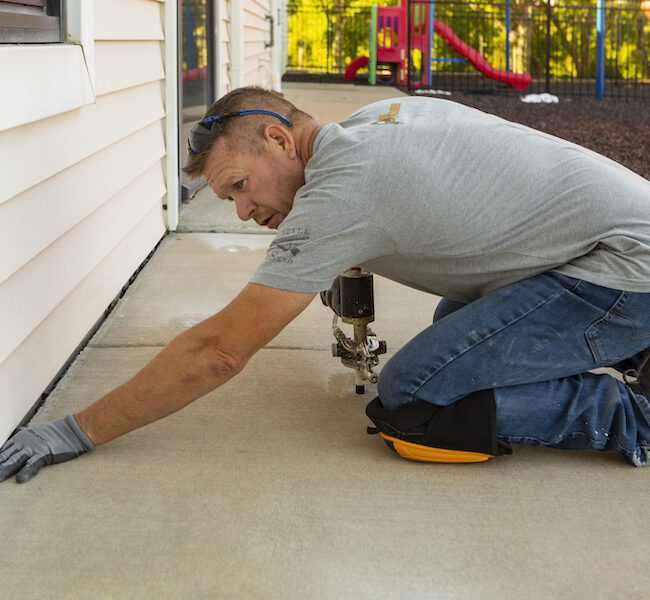
Polyjacking works by injecting a special foam—polyurethane foam—under the sunken concrete to make it level again. Polyjacking for warehouses is long-lasting because it strengthens the ground underneath by fortifying the soil and preventing future sinking or shifting. Polyjacking for warehouses is cleaner than concrete replacement, faster and more durable than mudjacking, and is eco-friendly, helping you obtain a green building certification like LEED.
Why Choose Pro Polyjacking for Warehouses?
If you need your unlevel or cracked warehouse concrete floor repaired, hiring Pro Polyjacking is the best solution. We have over 30 years of industry experience and have been serving Kansas City for decades. We’re a woman and family-owned local business with positive reviews and thousands of satisfied customers. Below are some of our customer reviews:
Pro Polyjacking can help with all commercial and residential concrete leveling needs in and around Kansas City, including: residential concrete leveling, commercial and industrial concrete leveling, concrete sealing and cleaning, deep injection, joint and crack repair, and farm silo polyjacking. We hold all required licenses and insurance that protects our employees. We also offer a warranty on all our projects, ensuring our customers are left completely satisfied. Get started by requesting a quote today!