
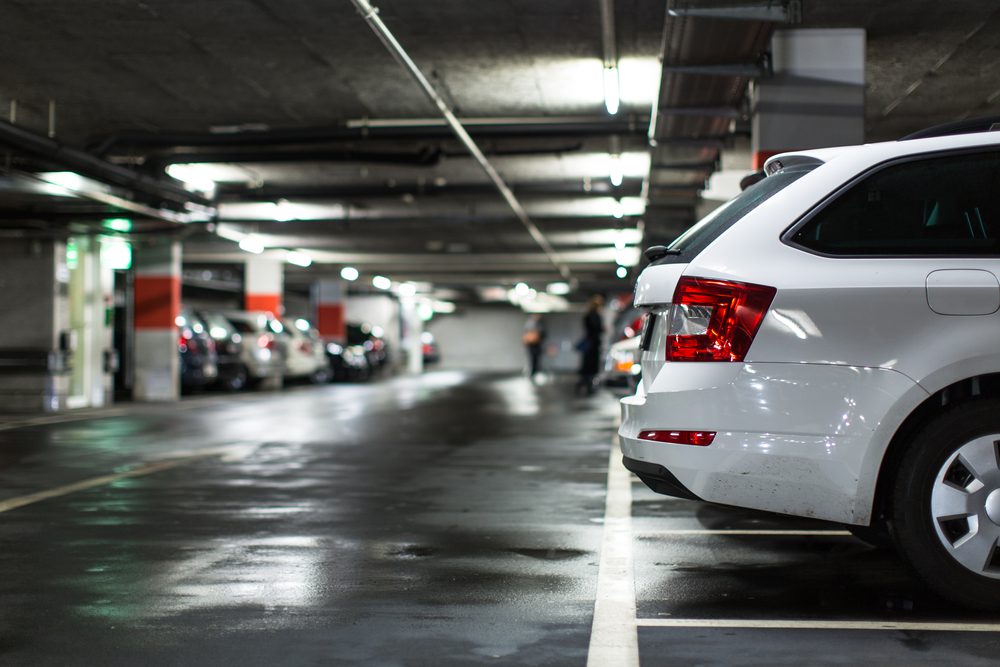

If you’re a business owner with a brick-and-mortar or rent a commercial space, you either have public, shared, or private parking on or near your property. Downtown buildings often share public parking structures, including decks and lots, while commercial buildings may have private parking structures. Whatever the case may be, you understand that parking in a municipal parking garage requires frequent maintenance for repairs.
Parking structures that are under frequent construction can deter potential customers and clients, reducing your ROI. Parking in a downtown area is already stressful, but the public relies on these parking structures to safely park their vehicle; frequent maintenance makes that difficult. Continue reading to learn how polyjacking parking structures can reduce maintenance costs, allowing you to keep things moving and clients coming and going freely.
Why do Parking Structures Require Maintenance?
Concrete is frequently mistaken for cement, but they’re not the same. Concrete is actually a blend of several components: aggregates such as sand, crushed stone, or gravel, combined with cement and water. The cement—often made from naturally occurring materials like lime, marl, or chalk—acts as the binding agent. When mixed with water, it reacts chemically and holds the aggregates together, creating a solid, durable material.
Parking structures are often concrete, a material chosen for its strength and durability, making it a popular building material for structures that need to support heavy loads. However, concrete can crack, causing structural and unsafe issues that require immediate repair. Parking structures require frequent maintenance because concrete can crack, and errors often occur during the pouring and curing process or from natural causes, including soil erosion. Parking structures can require maintenance for several different things:
- The concrete used was of the wrong strength and requires maintenance
- The concrete dried too quickly
- The wrong number of control joints was used
- Issues with pouring the concrete, such as freezing temperatures
- Constant exposure to chemicals, water exposure, and fluctuating temperatures
Parking structures with concrete cracks require immediate maintenance to ensure public safety. Not only can cracked concrete in parking structures create trip hazards that can cause serious injury, but they can also be structurally unsafe.
What is Polyjacking?
Luckily, cracks in concrete parking structures can often be repaired, depending on the severity of the damage and the cause. There are several different concrete leveling techniques, including mudjacking and polyjacking.
Mudjacking is often used when funds are limited, but it will cost you more money over time. Why? Mudjacking and polyjacking are both techniques used to lift and level uneven concrete, but the key difference lies in the materials used. Mudjacking is the older of the two methods and has evolved significantly over time. In its earliest form, it involved pumping actual mud beneath concrete slabs to raise them—an approach that didn’t stand up well to moisture or time. As the technique improved, contractors began using a heavier mix of natural materials like soil, sand, and cement. While more durable than basic mud, these materials can still settle or wash out over time, making mudjacking a more temporary fix in certain conditions.
For business owners looking to protect their property investment, polyjacking offers a modern, long-lasting solution for lifting and leveling uneven concrete. Unlike mudjacking, which relies on heavier, moisture-prone materials, polyjacking uses high-density polyurethane foam. This lightweight yet durable material is injected beneath the slab, where it expands to lift the concrete and reinforce the soil below.
The result? A faster, cleaner, and more permanent fix that minimizes downtime and holds up under heavy traffic. With its exceptional strength and resistance to erosion, polyurethane foam gives your concrete—and your business—stability that lasts.
How Polyjacking Parking Structures Can Reduce Maintenance Costs
Cities can fund repairs for parking structures if they’re municipal parking garages or if they’re used for transit, like near bus or train stations. However, you may be responsible for the cost of repairs if your business is a private development or shares a public parking structure. Choosing polyjacking is the most cost-effective solution to repairing parking structures.
Polyajcking has many benefits, including requiring zero maintenance. That means when you choose polyjacking for parking structures, you never need to close your parking garage for repairs again in an area that was polyjacked. It’s the most permanent concrete leveling technique, never requiring frequent releveling like mudjacking, reducing maintenance costs.
Trust Pro Polyjacking, Kansas City’s Premier Polyjacking Company for Over 30 Years, for Polyjacking Parking Structures
Trust the pros at Pro Polyjacking for your concrete leveling technique that can help reduce maintenance costs for parking structures. We’re proudly family-owned and woman-owned, with over 30 years of industry experience.
Cracks, unlevel spots, spalling, and other damages are unsightly, especially if they go unrepaired. Trust the team at Pro Polyjacking in Kansas City for your concrete repair now, regardless of the season. Contact our team for more information about polyjacking parking structures!