
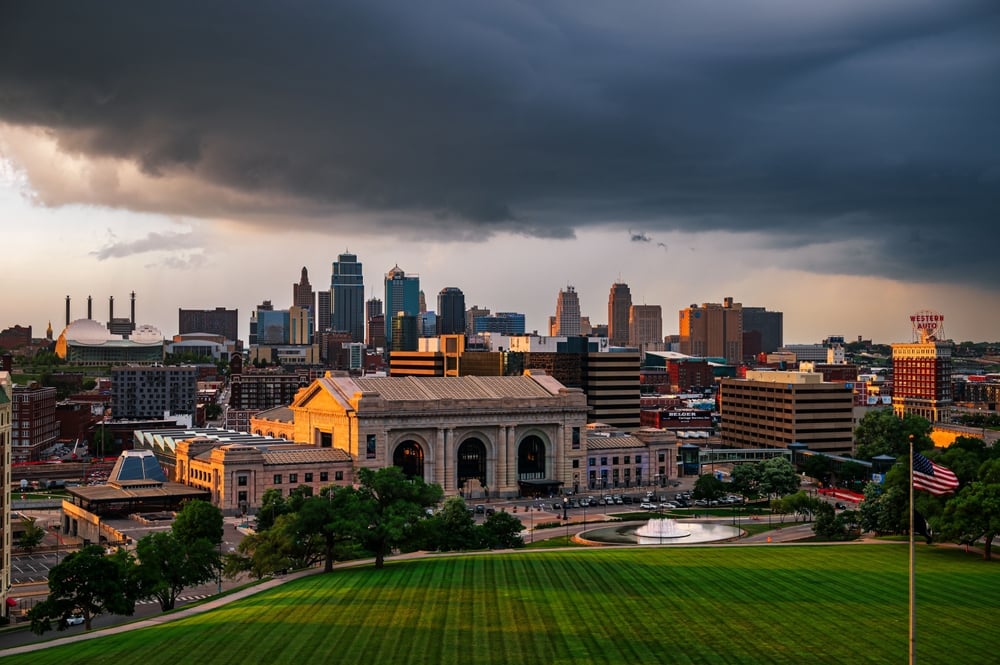

September is National Preparedness Month, making it a great time to think beyond emergency kits, evacuation plans, and weather alerts. Preparing your home or business for severe weather also means taking a closer look at the condition of the property itself. It’s especially important for Kansas City-area homeowners and business owners. The region experiences a variety of severe weather, including thunderstorms, damaging winds, hail, flooding, tornadoes, and winter weather. In fact, the National Weather Service continues to monitor these hazards throughout the Kansas City area, with severe thunderstorm warnings recently including damaging winds and hail.
While no concrete repair method can make a property immune to severe weather, addressing existing weaknesses can help improve the stability and resilience of the surfaces around your home or business. Keep reading to learn how polyjacking can help with structural resilience so you can better protect your personal or commercial property.
What Is Structural Resilience?
Structural resilience is essentially a property’s ability to withstand stress, recover from damage, and continue functioning when faced with challenging conditions. Severe weather can put considerable stress on a property. Heavy rain can saturate and erode soil. Flooding can wash away supporting material. Temperature changes can contribute to expansion and contraction. Strong storms can also introduce water and debris into areas that are already vulnerable.
Concrete that is already cracked, sinking, or unlevel may be more susceptible to additional problems when these conditions occur. That’s why preparedness shouldn’t only begin when a storm is in the forecast. Repairing existing property issues ahead of time can be an important part of maintaining a safe and stable home or business.
How Kansas City Weather Can Affect Concrete
Kansas City homeowners are no strangers to unpredictable weather. From heavy spring and summer storms to freezing winter temperatures, the ground beneath a concrete slab can experience significant changes throughout the year.
Heavy rainfall can contribute to soil erosion or create voids beneath concrete. When the supporting soil moves or settles, the concrete above it can begin to sink. Over time, you may notice:
- Uneven concrete slabs
- Cracks developing or becoming larger
- Sidewalks or driveways beginning to sink
- Gaps underneath concrete
- Pooling water around slabs
- Unlevel walkways or patios
These aren’t simply cosmetic concerns. Cracked concrete and uneven concrete can create trip hazards and may indicate that the soil beneath the slab isn’t providing adequate support. Pro Polyjacking has previously discussed how extreme Kansas City weather can affect concrete, including heavy rain, flooding, and freeze-thaw cycles.
Why Uneven Concrete Should Be Part of Your Preparedness Plan
When most people think about disaster preparedness, they think about emergency supplies and evacuation plans. Those are important, but property maintenance is another piece of the puzzle.
Imagine a major storm sends heavy rain across your property. If the soil beneath an already-sunken driveway or walkway is weakened further by water, the slab could settle even more. Addressing uneven concrete before severe weather arrives doesn’t guarantee that your property will avoid storm damage. However, it can address an existing weakness before additional environmental stress occurs.
This is particularly important for areas people use every day, such as:
- Driveways
- Sidewalks
- Walkways
- Patios
- Pool decks
- Commercial entrances
- Parking areas
- Concrete foundations
Pro Polyjacking provides residential concrete leveling services designed to restore sunken concrete to stable, safe levels while reinforcing the soil beneath it.
Polyjacking Can Help Address Existing Weak Points
One of the most important parts of disaster preparedness is identifying potential vulnerabilities before they become emergencies. The same principle applies to concrete. A small crack may not immediately seem concerning. A slight slope in a sidewalk may not appear particularly dangerous. A driveway that has settled a little may still be completely usable. But these changes can be signs that something is happening below the surface.
Pro Polyjacking’s concrete crack repair services use high-density polyurethane to repair and seal cracks while restoring stability to the concrete surface. Getting concrete repair completed before an existing issue worsens can help you stay ahead of maintenance rather than waiting until a problem becomes harder to manage.
GPR Can Help Identify What’s Happening Below the Surface
You can’t always determine what’s causing concrete settlement simply by looking at the surface.
That’s where Ground Penetrating Radar, or GPR, can be useful. Pro Polyjacking uses Ground Penetrating Radar technology to investigate what’s beneath a concrete surface, including potential voids, pipes, debris, and loose soil. Understanding what’s happening below the surface can help identify the appropriate approach to concrete repair instead of simply addressing the visible symptoms.
A Stronger Preparedness Plan Starts Before the Storm
National Preparedness Month is a reminder that preparing for an emergency shouldn’t begin once severe weather is already approaching. FEMA recognizes September as National Preparedness Month to encourage individuals, families, and communities to prepare for disasters and emergencies.
For Kansas City property owners, that preparation can include taking inventory of your property’s condition. Walk around your home or business and look for:
- Cracked or deteriorating concrete
- Uneven sidewalks
- Sunken driveway sections
- Gaps beneath slabs
- Water pooling near concrete
- Unlevel patios or walkways
- Changes in elevation around foundations
If you notice these issues, don’t automatically assume that complete concrete replacement is necessary. Depending on the condition of the existing slab and the cause of the settlement, concrete leveling may provide an effective way to restore the surface.
Don’t Wait for Severe Weather to Expose a Concrete Problem – Let Pro Polyjacking Help Today
Severe weather is unpredictable, but your property’s existing vulnerabilities don’t have to be. Taking care of cracked concrete, uneven concrete, and unlevel concrete before severe weather arrives can be one more way to maintain a safer, more stable property.
Polyjacking isn’t a substitute for a complete disaster-preparedness plan, and it can’t prevent every type of storm damage. However, addressing settled concrete and the soil beneath it can help eliminate existing problem areas before they have an opportunity to become bigger concerns.
At Pro Polyjacking, we’ve spent more than 30 years helping Kansas City homeowners and businesses with concrete repair and concrete leveling. Our team uses high-density polyurethane and modern technology to lift, stabilize, and restore concrete surfaces.
If you’ve noticed sinking, cracks, or other changes around your property, National Preparedness Month is a great reminder to take a closer look. Contact Pro Polyjacking to schedule an assessment and find out whether polyjacking could be the right solution for your concrete.