

Our homes are our safe place; they’re a place where we can unwind, relax, and spend time with our loved ones after busy days. Keeping our homes up to date with repairs and updates keeps them looking good and safer. We spend time doing household maintenance chores to keep them looking their best, including cleaning the gutters, staining the decks, and pressure washing the siding, to name a few. However, your home’s updates should go beyond the cosmetic; keeping the exterior safe protects your family and the public from injury.
Every home has concrete somewhere on the property, whether a concrete driveway, patio, pool deck, or sidewalk. How safe are your concrete structures? Are there cracks or gaps between sidewalk steps or uneven spots on your backyard patio? If so, concrete must be repaired to keep your loved ones safe. Continue reading to learn about the hidden dangers of ignoring concrete damage around your home so you can mark concrete repair off your to-do list.
Hidden Dangers of Ignoring Concrete Damage
Did you know that ignoring concrete damage impacts more than just your home’s aesthetic? While many homeowners shrug off minor cracks or uneven concrete, there are several hidden dangers. Below are just some of the many hidden dangers of ignoring concrete damage around your home:
Fall/Trip Hazards
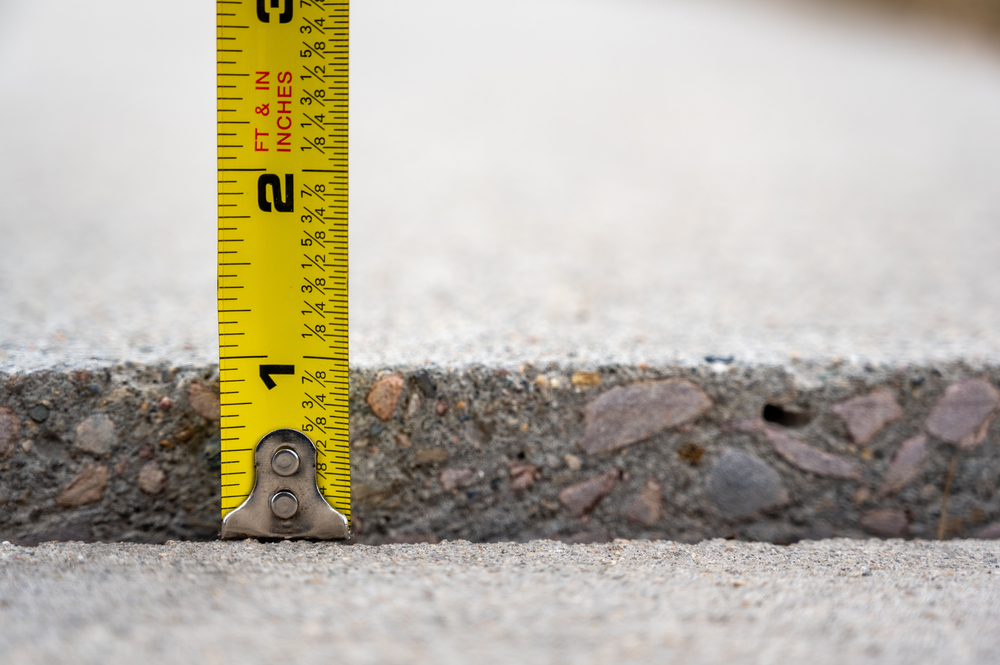
Cracked or uneven concrete can cause sections of pavement to shift, creating a dangerous trip hazard. From uneven neighborhood sidewalks to gaps in your concrete driveway to uneven concrete on your patio, uneven concrete increases the risk of falls and injuries. Uneven concrete creates a wedge or gap between the unlevel sections, causing shoes and feet to get trapped and making your footing unstable.
Now, imagine you’re hosting family for a holiday party, and you’re assisting an elderly family member across a damaged path or directing a loved one with mobility issues to your back patio. These conditions can be particularly hazardous for children, older adults, and individuals with mobility challenges:
Inaccessible Areas
Those who rely on stable footing—specifically seniors, young children, and individuals with mobility challenges—depend on smooth, even concrete surfaces without gaps, cracks, or uneven sections. Sidewalks, driveways, parking structures, and other concrete areas should remain level and safe to prevent accidents and improve accessibility. You never want your guests or family members to feel excluded from festivities simply because they cannot access your uneven concrete. It’s difficult and unsafe to navigate, particularly for those using wheelchairs, walkers, or other mobility aids.
Further Damage
By ignoring uneven or unlevel concrete, you’re potentially causing costly damage to your home. Because cracked and uneven concrete creates gaps between surfaces, water can seep into cracks, getting further beneath concrete slabs and causing future issues. Water that’s left to sit on top of damaged concrete can also break down the concrete over time, causing it to crack further or break off in tiny pieces, especially if there’s a freeze-thaw cycle.
Legal Ramifications
Your family isn’t the only one that uses your sidewalks and walkways; delivery drivers, mail carriers, neighbors, passersby, and friends frequent these surfaces, and if they’re damaged with uneven or cracked concrete, you’re at risk of serious legal and financial ramifications. Uneven sidewalks, cracked walkways, and unstable driveways raise the likelihood of slips, trips, and injuries. If an accident occurs, the homeowner may be held accountable for damages, medical costs, or legal action. Addressing concrete damage with concrete repair improves safety while reducing the chance of costly liability problems.
Concrete Repair Methods
Concrete repair involves repairing uneven and cracked concrete, restoring it to its original position. There are a few different concrete repair methods: mudjacking, DIY concrete repair, and polyjacking.
Mudjacking involves pumping a mixture of organic materials, including sand and dirt, combined with concrete to repair and lift sunken concrete. While it does initially lift cracked and sunken concrete, it’s a temporary solution that requires maintenance, as the concrete will inevitably sink again. While mudjacking is an affordable option, it’ll end up costing more eventually because it doesn’t strengthen the soil and requires maintenance every few years. Likewise, DIY concrete leveling is dangerous, often causing serious injury and further damage.
Polyjacking is the most permanent concrete leveling solution because it involves injecting polyurethane foam under the cracked or unlevel concrete and expanding, permanently lifting the sunken slab. Unlike mudjacking, polyjacking fortifies the soil under the concrete, making it a permanent solution that never requires maintenance.
Why is Polyjacking the Best Concrete Leveling Solution?
Polyjacking is the best concrete leveling solution for several reasons. For one, no other concrete repair method can compete with its durability. Polyjacking materials are more durable than mudjacking and DIY concrete repairs, never washing away or sinking again. Polyjacking’s polyurethane foam is a permanent solution that will never get damaged from water erosion or other exposures.
Polyjacking is also lightweight, making it durable and long-lasting to prevent future concrete issues. Polyurethane foam weighs between 2 and 4 lbs per cubic foot, whereas the mud/concrete mixture used in mudjacking weighs hundreds of lbs per cubic foot. Polyjacking is also the best concrete leveling solution because of its resistance to water exposure. Considering how often concrete is exposed to rain, snow, and other precipitation, water resistance is required for longevity.
Polyjacking is also maintenance-free, never requiring repairs and redos as mudjacking does. One of our most frequently asked questions here at Pro Polyjacking is how polyjacking’s pricing compares to mudjacking. There’s truly no comparison; polyjacking is a one-and-done process, whereas mudjacking requires maintenance. Therefore, polyjacking is a more wallet-friendly option than mudjacking, especially since mudjacking needs maintenance every few years.
Trust Pro Polyjacking, Kansas City’s Premier Polyjacking Company for Over 30 Years, for Residential Concrete Repair
If you need your unlevel or cracked concrete repaired, hiring Pro Polyjacking is the best solution. We have over 30 years of industry experience and have been serving Kansas City businesses for decades. We’re a woman-owned, family-owned local business with positive reviews and thousands of satisfied customers. Below are some of our customer reviews:
Pro Polyjacking can help with all commercial and residential concrete leveling needs in and around Kansas City, including: residential concrete leveling, commercial and industrial concrete leveling, concrete sealing and cleaning, deep injection, joint and crack repair, and farm silo polyjacking. We hold all required licenses and insurance that protects our employees. We also offer a warranty on all our projects, ensuring our customers are left completely satisfied. Get started by requesting a quote today!